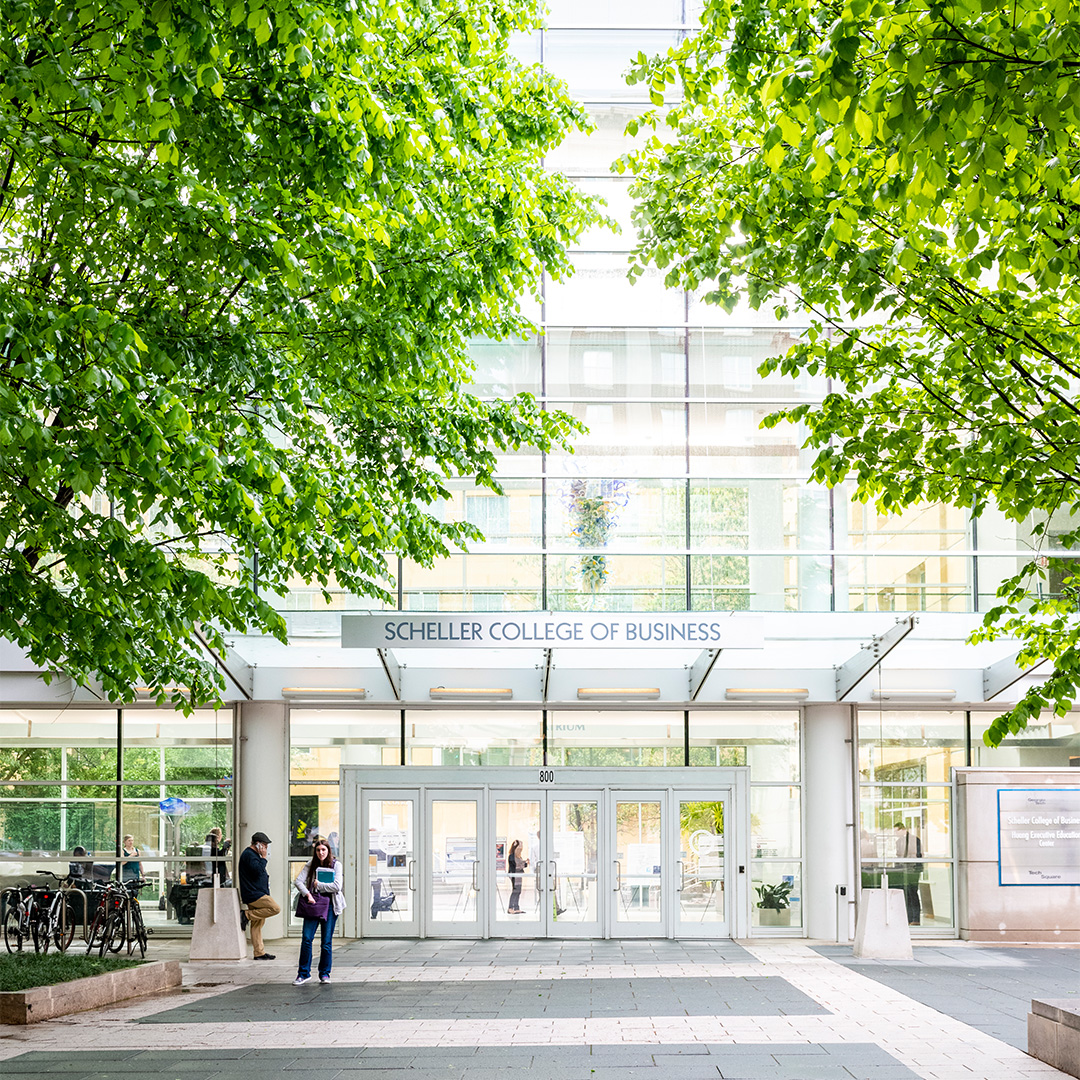
The Georgia Tech Scheller College of Business is set to launch a new undergraduate sustainable business minor, with enrollment beginning in May 2026. This interdisciplinary program, which was developed in collaboration with all the Institute’s colleges, is designed to equip students with the knowledge and skills to lead sustainability initiatives across industries, integrating environmental and social performance with core business strategies.
The 15-credit hour minor, open to undergraduate students from all Georgia Tech colleges, offers a unique opportunity to explore sustainable business practices, decision-making frameworks, and innovative models that align profitability with purpose. Courses will span topics such as sustainable supply chains, business ethics, stakeholder engagement, and sustainability reporting.
Interest in sustainability is growing rapidly among students and employers, and this new minor is poised to offer a practical, forward-thinking curriculum to prepare students with skills to lead and implement impactful changes at the forefront of entrepreneurial, corporate, and institutional practice.
“The sustainable business minor reflects Scheller’s commitment to innovation, collaboration, and ethical leadership,” said Manpreet Hora, senior associate dean for programs at Scheller. “It prepares students to address pressing global challenges through business solutions that are both impactful and responsible.”
The curriculum draws on the expertise of the Ray C. Anderson Center for Sustainable Business, whose partnerships with industry leaders have helped shape the program.
Andre Calmon, associate professor of operations management at Scheller and the Center’s faculty director, said, “The Southeast is attracting massive investment and creating thousands of jobs: electric vehicles, advanced batteries, sustainable aviation fuels, and clean energy infrastructure. We’re talking about billions of dollars in economic opportunity. These sectors need business leaders who can design and scale projects that deliver strong returns, generate quality employment, and improve environmental performance. We’re preparing our students to become those leaders.”
Ravi Subramanian, professor of operations management, led the drafting, collaboration across colleges, and approval of the minor. “The minor addresses a critical talent gap by equipping students from a range of disciplinary backgrounds with transferable knowledge in sustainable practices, decision frameworks, and innovation strategies,” Subramanian shared.
Students will benefit from real-world applications and experiential learning, including a practicum course and case-based projects focused on the intersection of business and sustainability.
Subramanian is excited to see the coursework enable students to turn great ideas into market-ready outcomes, such as optimizing energy use in cloud computing operations; making the business case for resilient, community-scale infrastructure; evaluating alternative energy within financial and regulatory constraints; bringing biodegradable materials to market; navigating global environmental and governance standards; or establishing robust supply chains.
“We are excited about this avenue for developing future leaders – no matter their disciplinary background,” he said. "These leaders will be adept at creating long-term economic, environmental, and social value.”