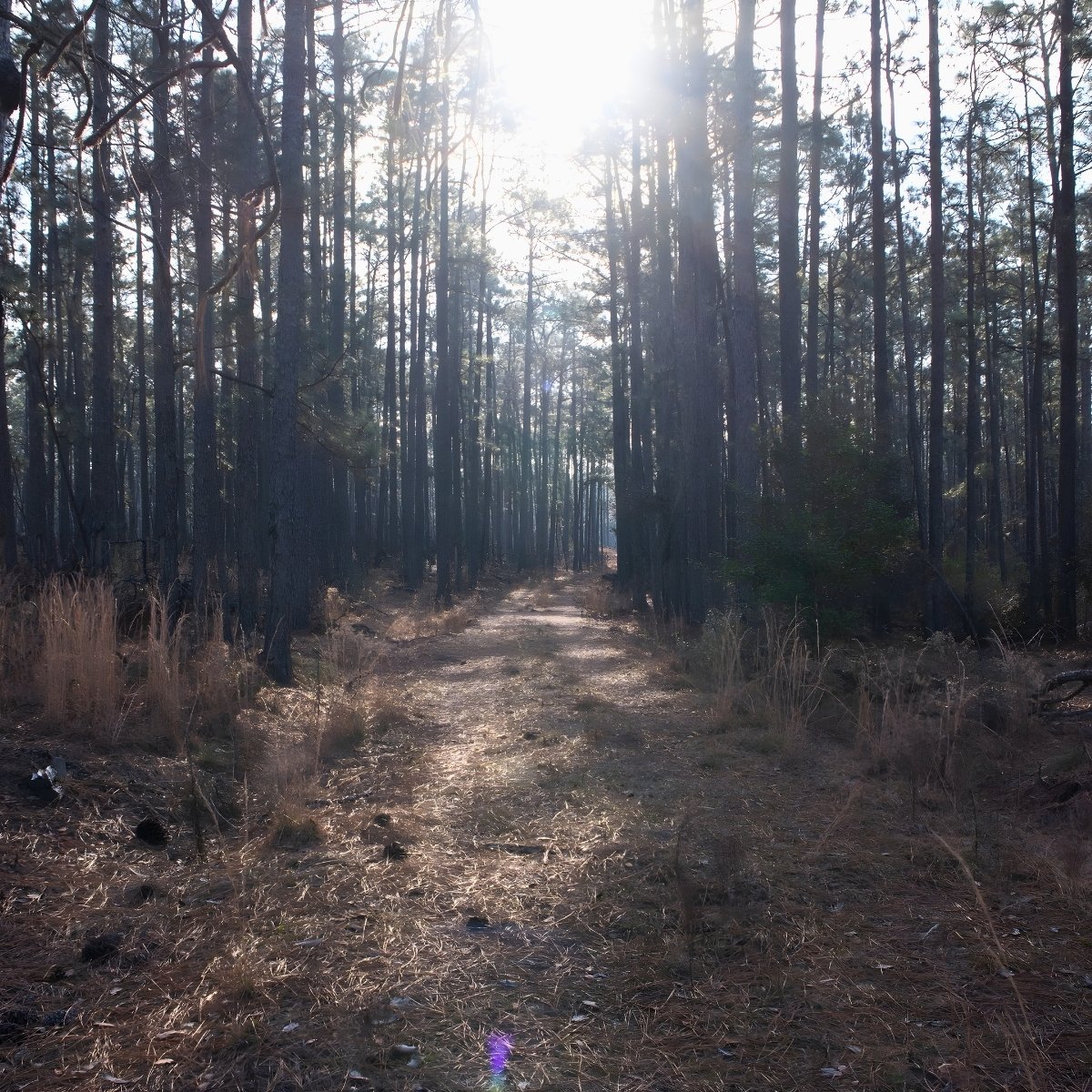
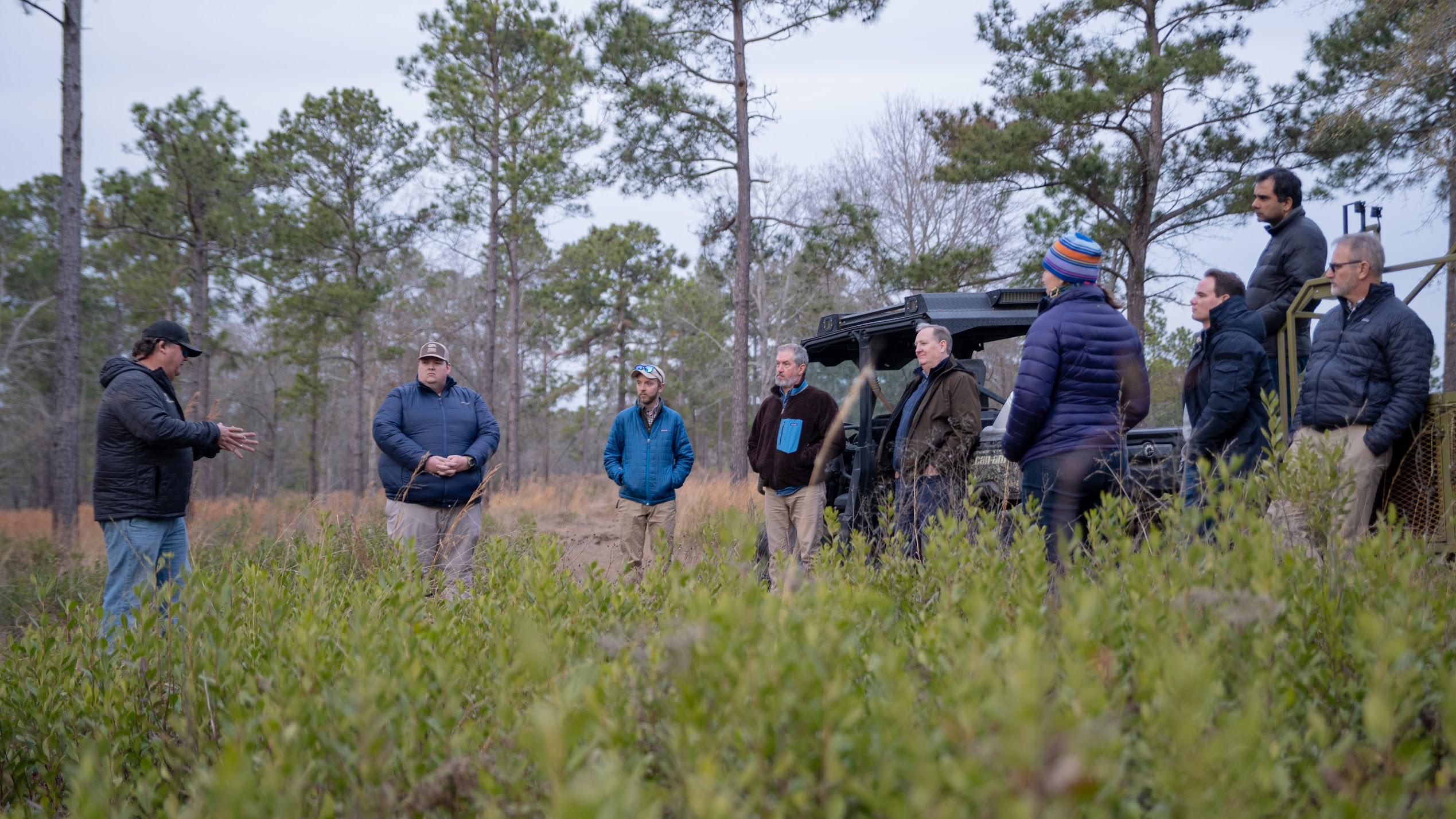
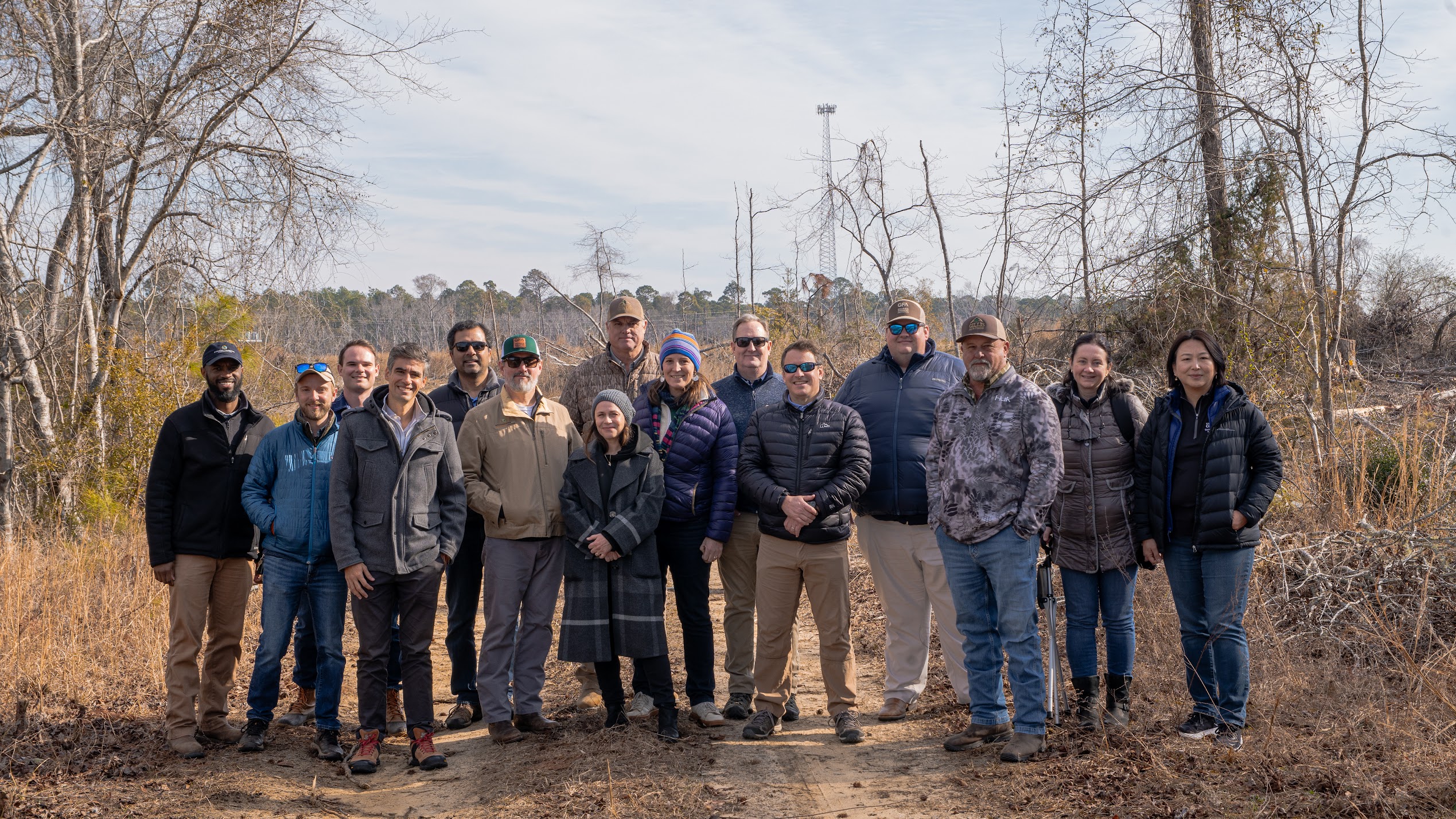
“If we take care of our forests, our forests will take care of us,” said Yanshu Li, associate professor of forest economics at the University of Georgia (UGA). This message was a main takeaway from a field tour held January 29-30, 2026, across working forests in Southeast Georgia. Organized by the Georgia Forestry Foundation (GFF) in partnership with the Ray C. Anderson Center for Sustainable Business at the Georgia Tech Scheller College of Business, Clemson University, and the UGA Warnell School of Forestry and Natural Resources, the trip brought together university researchers, foresters, potential carbon credit buyers, and family landowners.
Georgia is the number one forestry state in the country, with more than 22 million of its roughly 24 million forested acres held in private hands. According to the Southern Group of State Foresters, forests and the forest products industry in the Southern U.S. provide for more than 18% of the world’s pulpwood for paper and paper-related products and 7% of the world’s industrial roundwood. The timber industry also supports thousands of rural livelihoods and sequesters enormous amounts of carbon. Yet today, Georgia forests are under pressure due to natural disasters and market changes.
The field tour promoted a Georgia-specific carbon exchange that has the potential to save forests, help companies purchase high quality carbon credits, and provide co-benefits for the entire state.
Pressure Points: Helene’s Wake and Market Headwinds
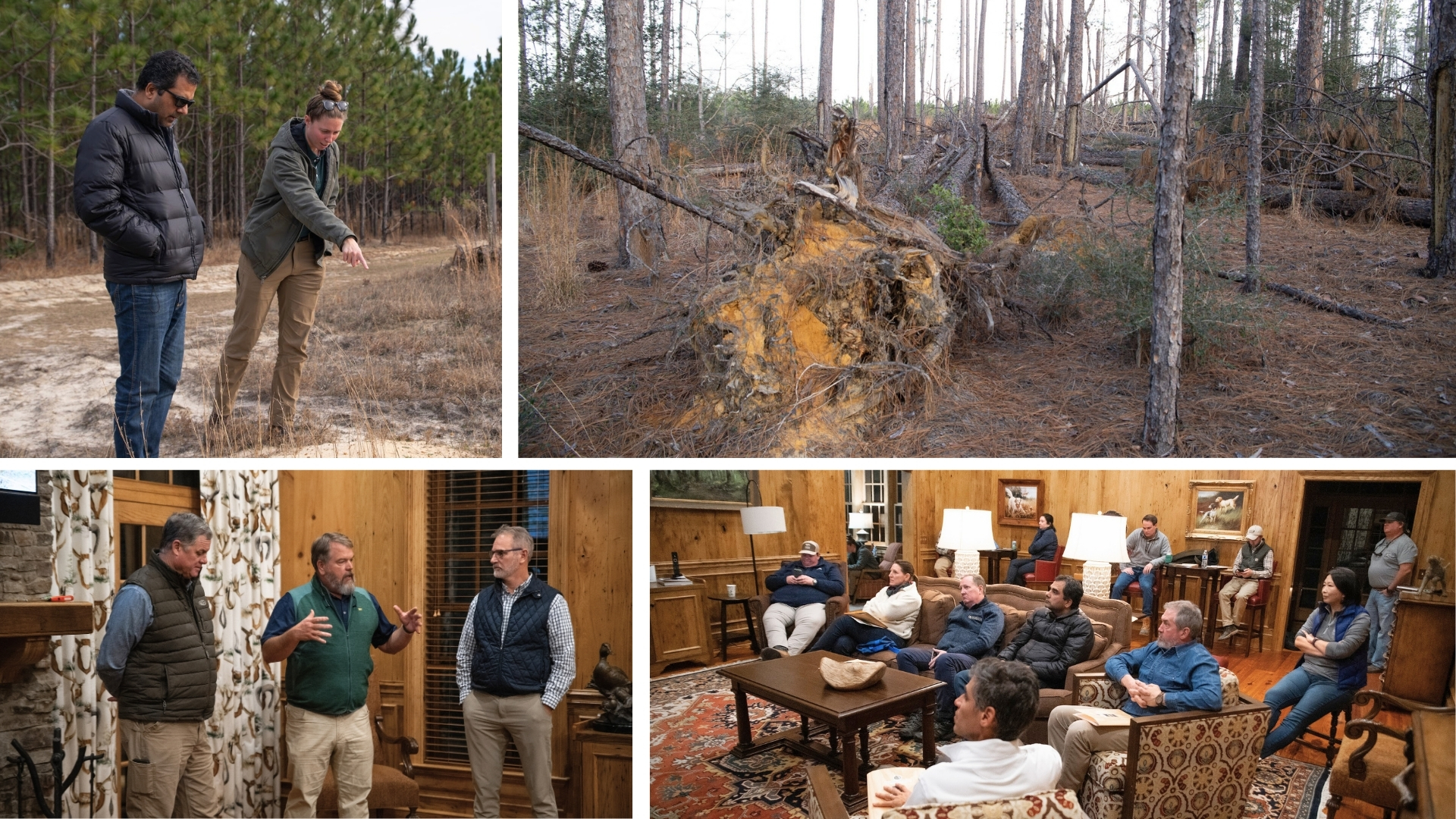
Across pine-forested Southeast Georgia, the devastation left by Hurricane Helene remains impossible to miss. A year and a half later, the cleanup – which is slow, expensive, and disheartening – is still ongoing across thousands of acres. Downed timber, too old to be sold for profit, lies in heaps. Throughout the field tour, landowners and foresters shared personal narratives that made it easy to feel the weight of what has been lost.
Helene only worsened troubles that were already underway. The markets for timber and pulpwood have been weakening. Demand for paper products has fallen sharply, taking pulpwood prices with it. In the last year alone, three mills have closed in Georgia.
Do I bother to replant? If I plant, will someone actually buy my timber in 20 years? These are the questions landowners across Georgia are wrestling with. Landowners’ decisions today can lead to a future with fewer forested acres, less healthy forests, and forests converted to development – a loss that is permanent.
The pressing question throughout the field tour was: What happens next?
Storytelling Matters: The Power of the Personal
One of the benefits of a field tour is the chance to hear firsthand, personal accounts from the people whose livelihoods depend on forests.
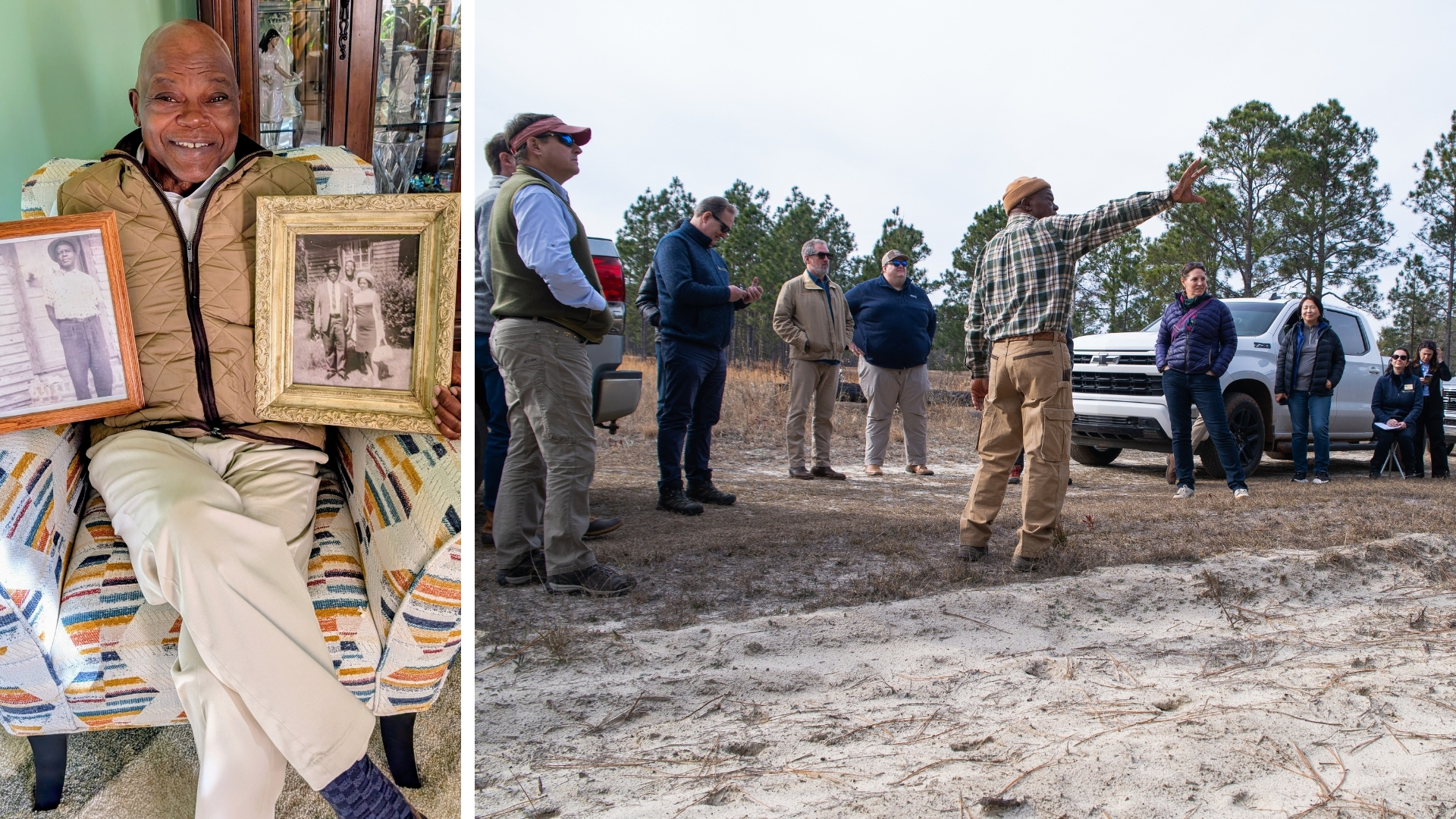
The tour began in Emanuel County at the Willie Hodges Family Farm Estate. Herbert Hodges welcomed the group to the 600-acre property his family has stewarded for four generations. Hodges shows his respect for the land through thoughtful stewardship – for which he was honored when he was named 2025 Conservationist of the Year by the Georgia Association of Conservation Districts. However, Hodges worries whether the fifth generation will keep the land, and he wants to demonstrate to his heirs that the land is worth holding onto. He remembers his father telling him, “Never get rid of the land. As long as you keep it, you have somewhere to live, somewhere to go.”
Matt Hestad, senior vice president of GFF, said, “Mr. Hodges has to identify new opportunities for his property not only to keep his family engaged but also to prove the land is economically valuable, both today and into the future.”
The carbon exchange, if built well, could be exactly that kind of new opportunity.
Building a Georgia Carbon Exchange
The initiative to develop a Georgia Carbon Exchange, launched in 2025, is being led collaboratively by the organizers of the field tour. It’s designed to create a voluntary carbon credit marketplace specifically tailored to Georgia’s forest landscape, Georgia’s landowners, and companies that are interested in purchasing high quality carbon credits.
David Eady, director of industry engagement at the Ray C. Anderson Center for Sustainable Business, described the vision: “We're looking at creating a marketplace for companies doing business in Georgia or headquartered in Georgia, so they can acquire credits that specifically benefit local communities and ecosystems. We want to make sure that we can continue to manage our valuable forest resources that make up well over half of the land in Georgia.”
“Companies are concerned about sustainability because their customers are – and one of the things that that's manifested is a market for carbon credits,” said Leslie Boby, director of the UGA Southern Regional Extension Forestry. “Being in forestry, we have the original carbon sequestration system: trees. And we have a lot of trees in Georgia.”
The foundation for the Georgia Carbon Exchange already exists, waiting to be built on.
All the Players at the Table
The January tour was a pilot that can be replicated for other groups of potential carbon buyers, policymakers, and stakeholders who need to understand what is at stake in Georgia’s forests before they can meaningfully invest in their future.
Hestad described what made this first tour valuable: “We need all the players at the table: academics, buyers, and landowners. I feel like we’ve learned from a variety of people about forest management – from a private family landowner about intergenerational challenges, from a recreation-focused landowner about wildlife management, and from landowners who have been impacted by Hurricane Helene. We’ve been provided with context for how a carbon exchange could serve those different sectors of landowners.”
For industry representatives on the tour, the experience was eye-opening. They joined the tour to learn more about recovery efforts, community support, and the mechanics of a carbon exchange. At the end of the tour, they said they had a clearer sense of both the urgency and the opportunity.
Lucas Clay, extension professional at the Ray C. Anderson Center for Sustainable Business, said, “Landowners are focused on the economics of forestry, and buyers are looking for quality credits. I think there's a lot of opportunity for both of these things to happen.”
A successful carbon exchange requires trust, understanding, and shared purpose to be cultivated deliberately. Tours like this one are part of that cultivation.
A Common Goal in Focus
Georgia has everything it needs to make a carbon exchange work: the forests, the science, the institutions, and the will. What it needs now is exactly what the field tour was designed to build: awareness, connection, and shared commitment among the people and organizations whose decisions will shape the future of the state’s forests.
Zach Johnson, procurement manager at Beasley Timber Management, LLC, told the group: “With every one green ton of tree growth, you sequester approximately one metric ton of carbon dioxide from the atmosphere. Let’s find a way to certify this wonderful resource we have and prop up these jobs in Georgia – before it’s too late.”
Maintaining Georgia’s forests is not only about carbon. Well-managed forests filter water, support native wildlife, improve air quality, protect public health, and provide opportunities for outdoor recreation. These are co-benefits that a carbon credit does not fully capture but that are very much part of the value proposition for maintaining Georgia’s private forests.
Among the pines of Southeast Georgia, a common goal came into focus. The forests are worth saving. And the right people are coming together with the right plan to make it happen.
To learn more about the Georgia Carbon Exchange and upcoming field tours, contact Lucas Clay.
Written by Jennifer Holley Lux
Photography (unless otherwise noted) by Mike Gregory (Georgia Forestry Association & Foundation)