The Sustainability Journey Begins
My interest in sustainability has grown steadily over the years. I started with small, everyday choices – being mindful about what I eat, where I shop, and how I manage waste. Even in something as simple as clothing, I focused on being intentional about the clothes I purchase by choosing quality fabrics that would last longer than fast-fashion alternatives. These habits are also a part of my faith, which emphasizes living responsibly with the resources we’ve been given. Over time, these personal practices became connected to both my academic and professional path.
When I was first exploring majors at Georgia Tech, I came across the Socially Aware Mobility Lab – a project that includes collaborations with faculty from the H. Milton Stewart School of Industrial and Systems Engineering (ISyE), the School of Civil and Environmental Engineering, and the School of City and Regional Planning at Georgia Tech. The lab is focused on solving the “first/last mile” problem, traffic congestion, and fostering sustainability. The lab’s research highlights how sustainability is more than just recycling or conservation; it’s also about designing systems that balance efficiency and access for all.
Now as an industrial engineering major, I see sustainability as inseparable from optimization. At its core, my major is about finding smarter ways to use fewer resources, minimize waste, and create processes that last.
The Project: Increasing Sustainability at EY Boston
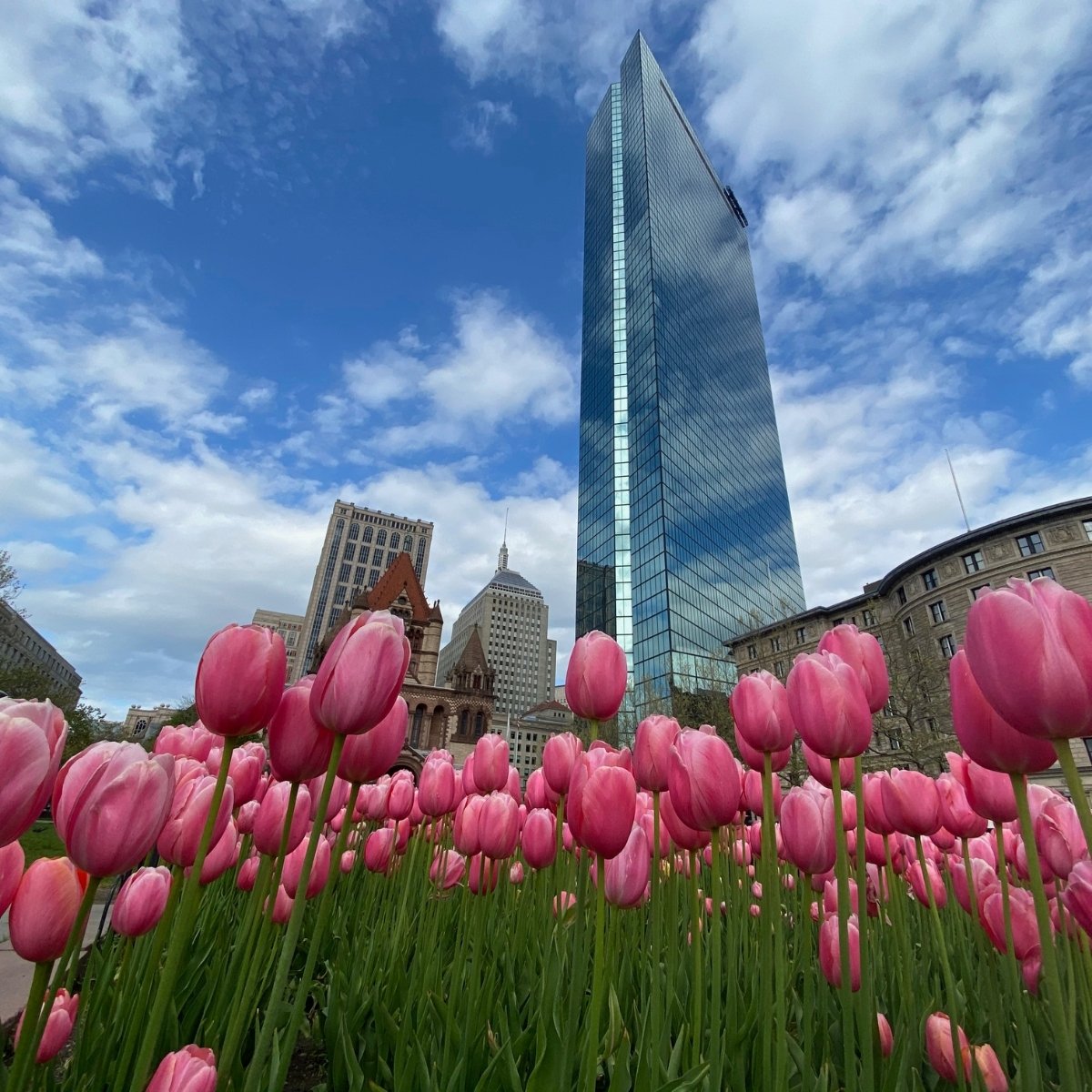
This past summer, I had an internship in technology consulting at EY Boston, located in the historic John Hancock Tower. I also made the decision to join the Carbon Reduction Challenge (Challenge). Co-hosted by the Ray C. Anderson Center for Sustainable Business and Georgia Tech College of Sciences, the Challenge brings together students, alumni, and community and industry leaders to tackle pressing environmental issues through creative initiatives and sustainable practices.
The Challenge presented me with a mission: to research and pitch a project to my employer that would reduce carbon and save money. Since my start date was later than many other internships, I felt behind on Day One. On top of that, I felt overwhelmed when figuring out who I should contact in such a large and compartmentalized firm as EY.
After weeks of coffee chats with EY employees, I finally connected with the EY Boston Green Team. This relatively new environmental sustainability group had been formed to serve employees and the local community. Members were still figuring out how to launch programming while balancing full-time roles. In the past few months, the team had tackled building office support surrounding the sustainability space and worked on implementing compostable utensils. Learning from their current initiatives gave me direction on where I would be able to strategize my own input. Given the wide range of office support, I made the decision to build upon their existing initiatives on making the aging EY building in Boston more sustainable.

My project came along in two phases.
Phase 1 entailed working on two solutions that were affordable and feasible within a limited timeframe. First, since the Green Team was working on implementing compostable utensils, I decided to implement composting areas and a composting system linked to Boston’s anaerobic digestion facilities. The second solution involved adjusting setpoints for heating, ventilation, and air conditioning (HVAC).
Phase 2 involved research for sustainable investment opportunities with high return. I proposed a plan on how EY could optimize HVAC systems and improve energy efficiency by building upon motion sensors already installed in the building.
Together, these two phases have the potential to save more than 3.1 million pounds of CO2 and $223,000 over ten years.