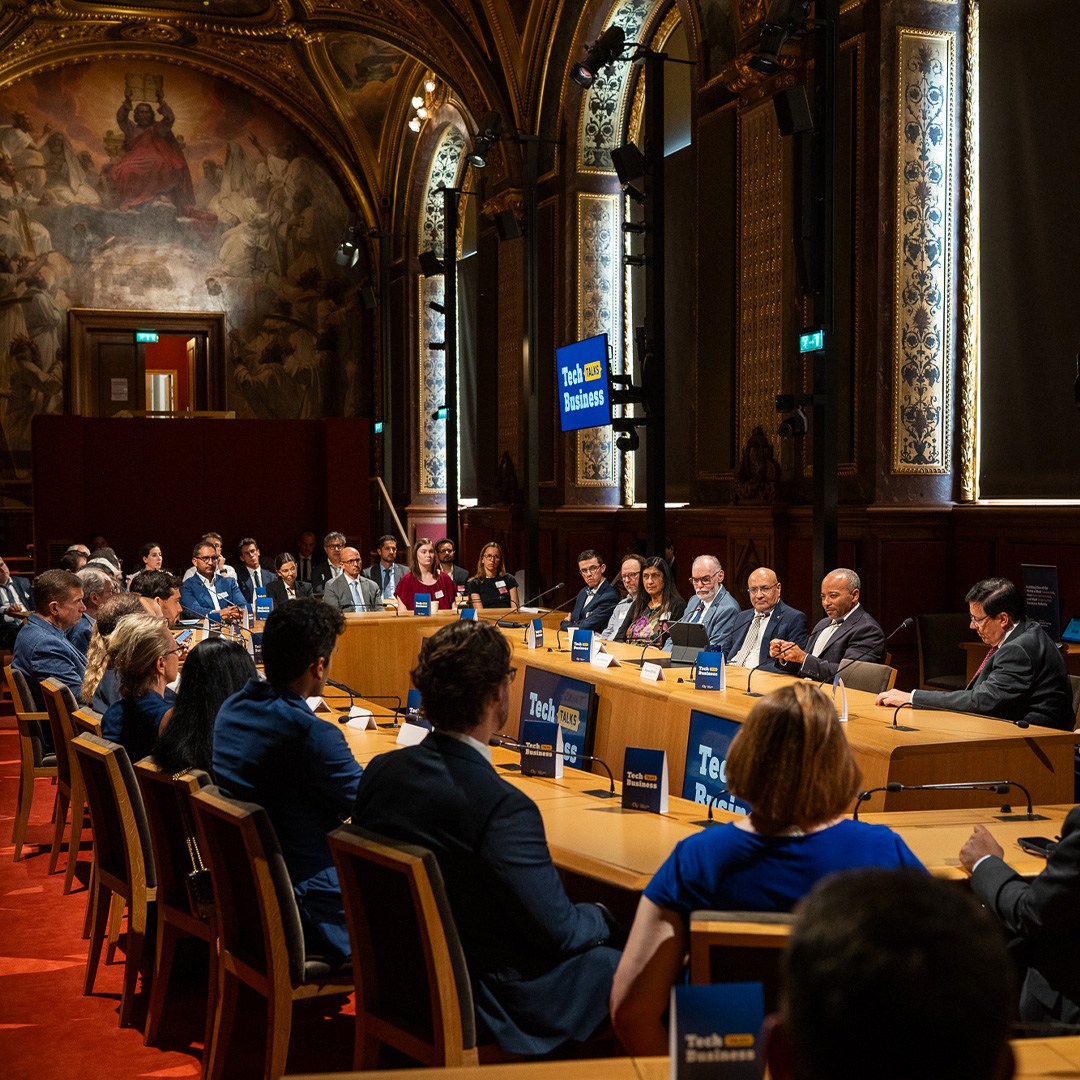
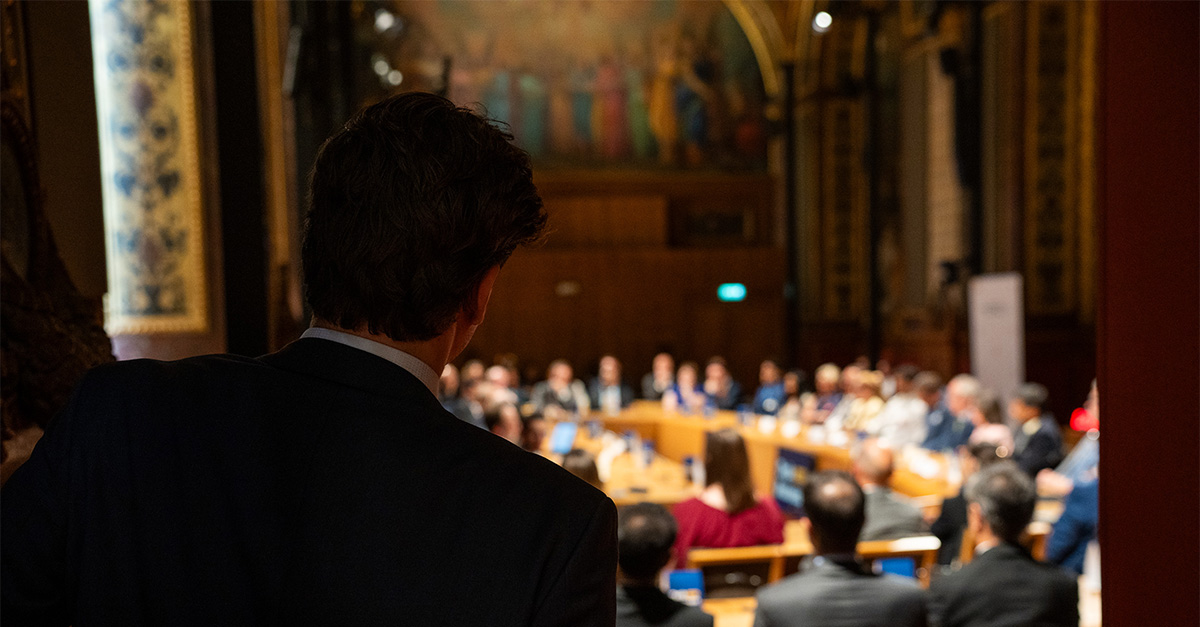
In a setting rich with history and global influence, the Tech Talks Business series made its international debut at Luxembourg Palace in Paris. Hosted in collaboration with Georgia Tech-Europe based in Metz, France, this session brought together alumni, partners, and Institute leadership, with Georgia Tech-Europe President Abdallah Ougazzaden playing a key role in bringing the event to life.
The evening featured a fireside chat between Scheller College of Business Dean Anuj Mehrotra and Georgia Tech Provost and Executive Vice President for Academic Affairs Raheem Beyah. Leaders from across the Institute included special guests William Gaudelli, dean of the College of Lifetime Learning; Amanda Murdie, dean of the Ivan Allen College of Liberal Arts, Regents’ Professor and Ivan Allen Jr. Chair; and Vivek Sarkar, dean of the College of Computing and John P. Imlay Jr. Chair.
“This is a city that has shaped ideas, innovation, and culture for centuries,” Mehrotra told attendees. “It is only fitting that we are having a conversation about the future right here.”
The discussion centered on how universities and organizations must adapt in an AI-driven world and the role Georgia Tech is playing in preparing students for that future.
Preparing Students to be “AI Fluent”
Beyah emphasized that artificial intelligence is not simply another tool but signifies a foundational shift.
“I think of AI as an operating system,” Beyah said. “It will underpin everything that we do, reshaping how institutions teach, research, and operate.”
To meet that shift, Georgia Tech is focused on ensuring every student graduates “AI fluent” — capable not only of using AI tools but applying them responsibly in real-world contexts.
That preparation is grounded in Georgia Tech’s longstanding culture of experiential learning. From physical makerspaces to a rapidly expanding AI makerspace, students are encouraged to move beyond theory and build systems that mirror real-world applications.
“What takes us from the whiteboard to building real-world systems is what prepares our students for industry,” Beyah said.
Thousands of students across disciplines are already using the AI makerspace to develop models and tackle complex challenges. This effort is strengthened through partnerships with companies such as NVIDIA.
|
|
Industry, Innovation, Lifelong Learning
As AI evolves, Beyah noted a growing shift in the relationship between higher education and industry. While companies have long guided universities on workforce needs, many now look to institutions like Georgia Tech for direction.
“Industry is asking not just for familiarity, but for students who can solve real-world problems using AI before they even arrive,” he said.
That demand reinforces Georgia Tech’s emphasis on hands-on learning, entrepreneurship, and continuous education. Through initiatives like CREATE-X, the Vertically Integrated Projects (VIP) program, and the Institute’s College of Lifetime Learning, Georgia Tech is equipping students and alumni with the tools to adapt throughout their careers.
“The half-life of a degree is decreasing,” Beyah said. “We will all need some form of lifelong learning.”
Entrepreneurship also remains a key pillar. This year alone, Georgia Tech expects to launch roughly 140 startups through its student incubator programs, reflecting a broader push to translate research and ideas into real-world impact.
A Global Platform for Collaboration
Held in the historic Luxembourg Palace, the event also underscored Georgia Tech’s commitment to global engagement. Leaders highlighted the importance of international perspectives, particularly in areas like AI policy, cybersecurity, and ethics.
“Understanding different cultures, regulations, and perspectives is critical, especially in AI,” Beyah said.
Georgia Tech-Europe, which has served more than 13,000 students over the past three decades, continues to play a central role in that mission, offering students opportunities to learn and collaborate across borders.
Leadership Amidst Change
Beyah emphasized that leadership is grounded in listening, collaboration, and adaptability.
“I care about making the right decision and that requires listening,” Beyah said.
As Georgia Tech navigates rapid technological change and a complex global landscape, that mindset — combined with a culture of innovation — positions the Institute to lead in whatever comes next.
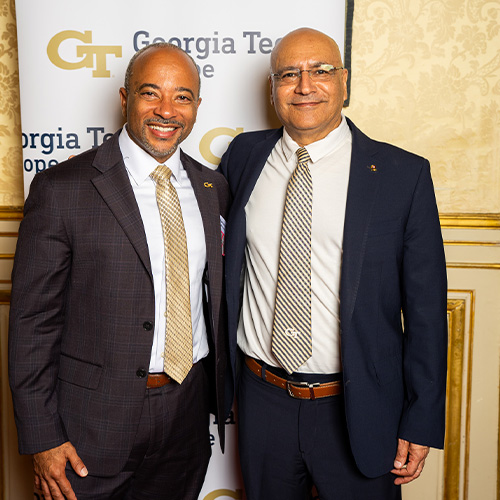
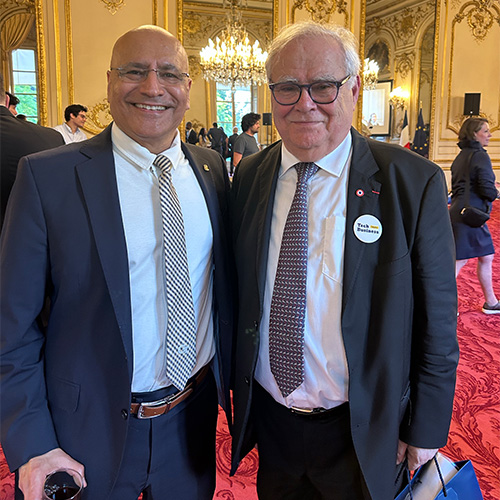
The evening concluded with a networking reception, where alumni and guests continued the conversation, reinforcing the global community that powers Georgia Tech’s impact.