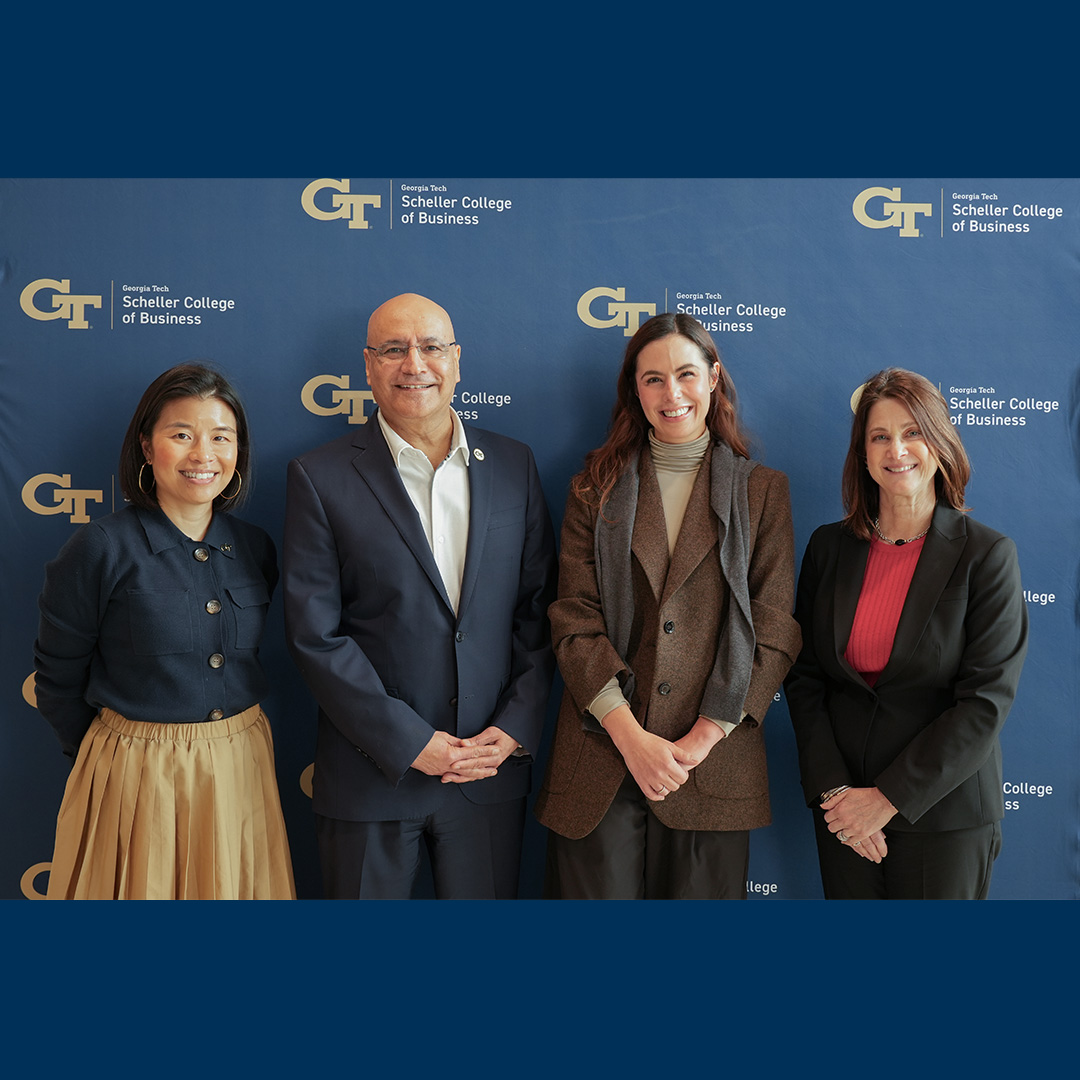
The 2026 Marketing Innovation Conference included a special Tech Talks Business session that welcomed three chief marketing officers of world-renowned companies to the stage for a candid conversation on the future of marketing. Dean Anuj Mehrotra moderated the discussion with Maria Elisa Botero, CMO of Nutresa; Jeannine Haas, CMO of Gulfstream Aerospace; and Melody Lee, CMO of Mercedes-Benz USA.
Across categories as varied as consumer-packaged goods, private aviation, and luxury cars, one theme united their experiences: modern marketing is no longer about persuasion. It’s about precision, systems, and trust.
Different Industries, Shared Complexities
Despite their contrasting sectors, each CMO emphasized the intricacies of leading large, multidisciplinary teams in a fast-moving marketing landscape.
Botero oversees marketing for 100-plus Nutresa brands across 18 countries. Despite its size, Nutresa’s 400-person marketing organization is deeply collaborative. With a background built at some of the world’s biggest tech companies like Meta and TikTok, Botero’s communication style centers on easy expertise with online chat.
Haas called her Gulfstream team “small but mighty,” noting their 75-person team includes an in-house agency structure and the need for face-to-face creative collaboration.
At Mercedes-Benz USA, Lee leads a team of about 250 direct reports and agency personnel. “My day usually starts early since Germany is six hours ahead,” Lee shared. “I spend a lot of time talking to dealers, customers, and my colleagues. My favorite way of communicating is walking down the hall.”
Defining Luxury and Brand Aspiration
With two luxury brands on the panel, the discussion turned to the meaning of luxury and how younger generations are redefining it.
Lee described luxury as the art of marketing something “intangible.” Customers know luxury products cost more but happily buy because it satisfies a desire, not a need.
“People think they’re buying a car rationally, but really, they’re making a decision by instinct,” Lee said. “Having a brand they can trust provides a shortcut.”
Haas echoed this from a private aviation perspective, where exclusivity and service are paramount. “We work with a very small addressable market with a customer base in the thousands,” Haas said. “We are investing more in knowing who our customer is and leveraging that information across acquisition- and retention-related activity.”
Botero noted that in Latin America, heritage brands must adapt to changing technology. “Gen Z is the first 100% digital generation, and we are equipped to track their consumer lives more fully. The important part is understanding how to interpret this data to ultimately win mental space and trust for your product.”
Trust, Data, and AI: The New Marketing Equation
The conversation repeatedly landed on the evolving relationship between consumers, data, and technology. All three stressed AI’s potential for efficiency, but none viewed it as a replacement for human insight and creativity.
Haas highlighted Gulfstream’s work in predictive analytics to preserve trust while enhancing the customer experience. The company now anticipates service needs before aircraft owners even notice them. “We don’t need the owner to know we’ve intervened,” Haas explained. “What we really want is the owner to know that their access to the aircraft is seamless.”
Botero emphasized the necessity of a value exchange. “If you ask people for data, you must ensure privacy, and you must give them something in return” she said. “That’s when trust is built.”
Lee added a simple rule: “AI needs to be used in the service of making something better. If it makes it harder, forget it.”
Inside a Viral Campaign
Botero shared Nutresa’s highly successful chocolate collaboration with Colombian reggaeton artist Ryan Castro. Nutresa handed creative control to Castro’s team, allowing them to design, produce, and promote a new chocolate product rooted in the singer’s childhood memories.
Nutresa planned to sell 1.2 million units in four months; instead, the company sold them all in less than a month. For Botero, the campaign reaffirmed one of her core beliefs: “No one knows how to address the audience better than the one who has the audience.” It was a powerful reminder that modern creativity often means relinquishing control and trusting the people who understand the cultural moment best.
Preparing the Next Generation of Marketers
Dean Mehrotra asked the panelists what skills they believe today’s students must carry into their careers. Grounded in decades of leadership, their responses painted a picture of what it truly takes to thrive in marketing today.
Haas emphasized the need for strong communicators who can connect with others in real time. “Small talk is a lost art,” she said. The ability to listen, converse, and collaborate has never been more important.
Botero pointed to the rapid pace of change. With new tools, technologies, and platforms emerging constantly, she argued that the most valuable skill is the willingness to learn and relearn. “Things are changing so fast. Curiosity is essential.”
Lee urged students to embrace the realities of the workplace. “Where there are people, there are politics — so learn how to play them,” she said. Influence, buy-in, and human dynamics shape organizations. Understanding how to sell an idea internally is just as important as selling it to the market.
The panelists’ candor, humor, and strategic clarity gave students and industry professionals a look into the evolving discipline of marketing. Whether discussing AI, global customer expectations, or personal career setbacks, the CMOs emphasized resilience and the irreplaceable role of human creativity.