The TI:GER Program (Technology Innovation: Generating Economic Results) at the Georgia Tech Scheller College of Business merges classroom instruction, technology innovation projects, and practical, real-world experiences. It brings together MBA and Ph.D. students who collaborate in teams to develop their entrepreneurial ideas into impactful technology innovation projects.
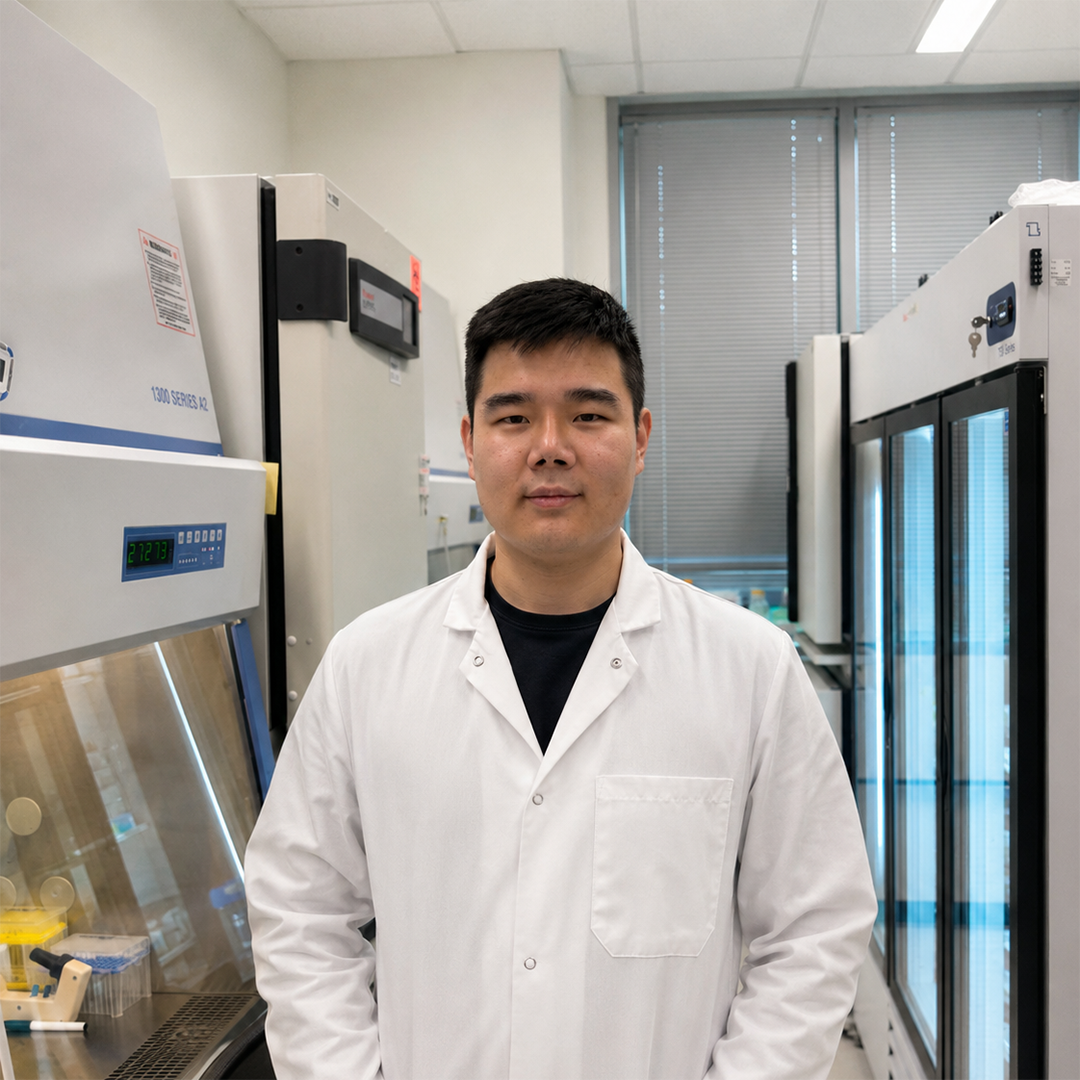
Meet Zhonghao (Eric) Dai, Ph.D. candidate in Bioengineering.
What school are you in?
I am in The Wallace H. Coulter Department of Biomedical Engineering and affiliated with the Institute for Bioengineering and Bioscience (IBB).
Who is your faculty advisor, and what is your research area?
My advisor is Dr. Ankur Singh, and my research area is Immune Cell Engineering.
What initially interested you about the TI:GER program?
As a Bioengineering Ph.D. student, I had been trained to think deeply about scientific novelty, experimental rigor, and technical feasibility. However, I also wanted to understand what happens after a discovery leaves the laboratory. TI:GER interested me because it offered a structured way to evaluate whether a technology addresses a meaningful unmet need, who would benefit from it, and what would be required to translate it into a viable product or company. In addition, because my research work has strong translational potential, TI:GER felt like a natural opportunity to connect my scientific training with entrepreneurship, commercialization, and real-world impact.
What were you hoping to gain from the program when you enrolled?
I wanted to develop a practical framework for translating research beyond publications and patents. In particular, I hoped to learn how to conduct customer discovery, define a clear value proposition, assess competing technologies, and identify the most promising initial market for a platform technology. I also wanted to become more comfortable communicating with business professionals, investors, and industry partners. My long-term goal is to lead translational research that bridges academic innovation and biotechnology development, so I saw TI:GER as a way to build skills that are not typically included in Ph.D. training.
Was there a specific moment or conversation that helped you decide TI:GER was the right fit for you?
I learned more details about TI:GER from Monica Zhong, a former member of our lab and a recent graduate of the program. Her immune organoid research had begun generating patents and commercialization opportunities, and she shared how much TI:GER helped her evaluate those opportunities, understand customer needs, and think beyond the academic laboratory. Hearing about her experience and the practical skills she gained convinced me that TI:GER would be the right program to help me explore the translational potential of my own research.
What skills did you develop or strengthen most through your TI:GER experience?
The most important skill I developed was learning to translate a scientific platform/solution into a clear and compelling value proposition. I also strengthened my ability to conduct customer discovery without simply trying to confirm my original assumptions. Our interviews showed that some of our early ideas about the target market and product direction needed to change, a finding which taught me to let customer evidence guide the strategy.
I also strengthened my ability to work across disciplines. Collaborating with Roshina Mohamed Rafee and Palani Raja, the MBA students on our team, exposed me to how business students approach market segmentation, TAM analysis, pricing, competitive positioning, and customer acquisition. I learned how to contribute technical and biomedical insights while also framing them in ways that supported business decisions.
How did the program help connect classroom learning to real-world impact?
TI:GER is structured so that everything we learned was applied to a real project. Our team worked on a consumer digital platform that connects health signals with spending patterns to help users recognize and avoid regret-driven purchases during periods of fatigue or overload. We used customer discovery, market segmentation, competitive analysis, and value proposition development to identify the most promising users and refine how we should position the product. Feedback from our interviews directly challenged several of our early assumptions and helped us make more evidence-based decisions about the target market and product features.
How has your TI:GER experience shaped your goals after graduation?
TI:GER strengthened my interest in working at the intersection of scientific innovation, technology development, and commercialization. I want to continue developing new technologies, but I also want to understand how they can move beyond the laboratory and create meaningful value for users. The program gave me practical frameworks for evaluating customer needs, market opportunities, and commercialization pathways that I plan to apply to future bioengineering and healthcare projects.
If you could describe the program in one sentence to a prospective student, what would you say?
For Ph.D. students, TI:GER is a valuable opportunity to learn how to move an innovative idea beyond the laboratory by understanding customer needs, developing a commercialization strategy, and collaborating with MBA students who bring a complementary business perspective.