The TI:GER Program (Technology Innovation: Generating Economic Results) at the Georgia Tech Scheller College of Business merges classroom instruction, technology innovation projects, and practical, real-world experiences. It brings together MBA and Ph.D. students who collaborate in teams to develop their entrepreneurial ideas into impactful technology innovation projects.
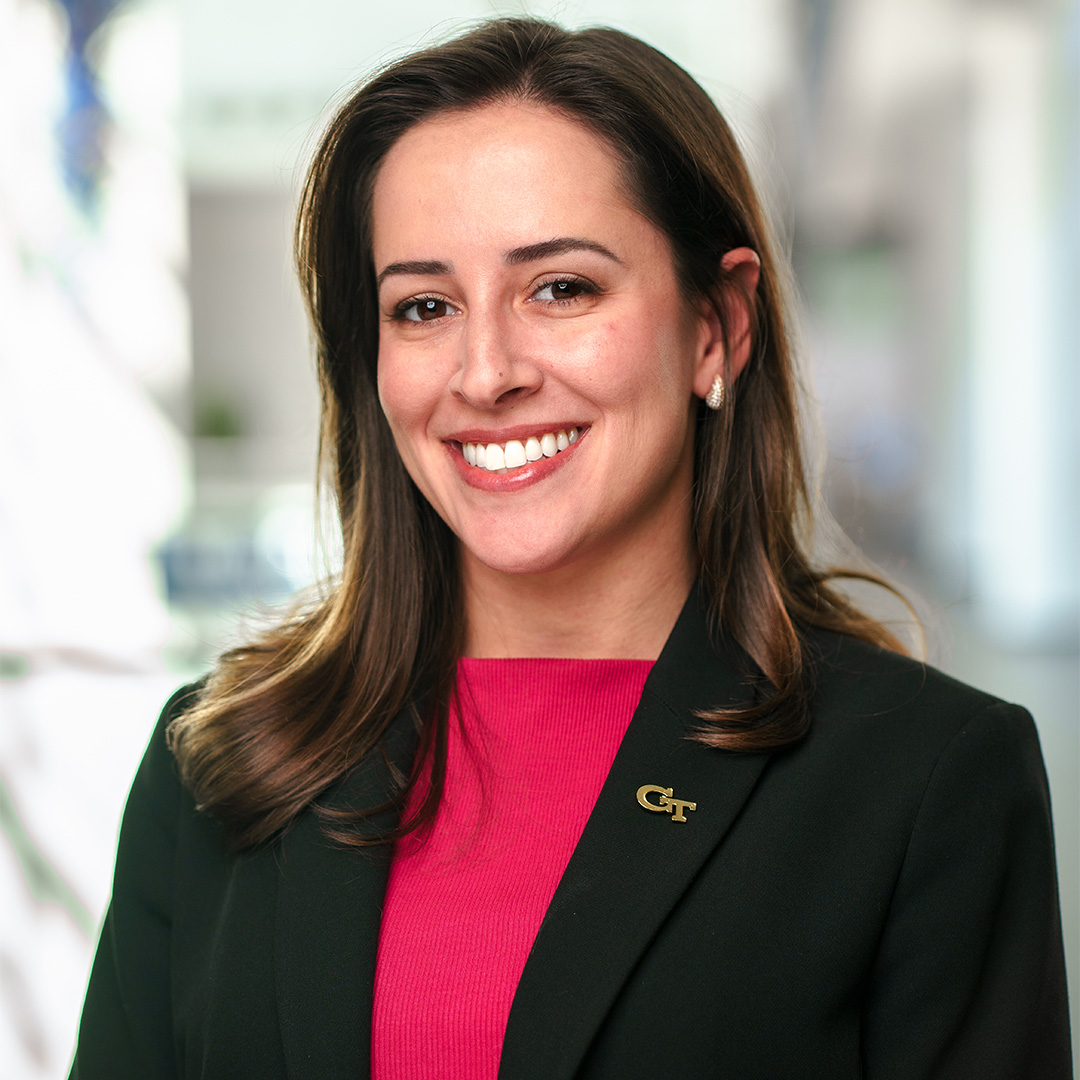
Meet Bruna O’Sullivan, a Full-time MBA student concentrating in TI:GER and Strategy & Innovation.
What is your background?
My background is in healthcare and pharmaceuticals. I’m especially interested in how innovation and business strategy can help bring meaningful healthcare solutions to patients and caregivers.
What initially interested you about the TI:GER program?
TI:GER stood out to me because it was not just about learning entrepreneurship in theory. It offered the opportunity to work on a real technology innovation project, collaborate with students from different backgrounds, and think about how an idea can move from concept to market.
Coming from a healthcare and pharmaceutical background, I was excited by the chance to better understand how innovation can create real impact for patients, caregivers, and healthcare systems.
What were you hoping to gain from the program when you enrolled?
When I enrolled, I was hoping to strengthen my ability to evaluate innovation from both a business and customer perspective. I wanted to learn how to identify a real market need, validate assumptions through customer discovery, and build a more structured approach to commercialization. I also wanted to become more comfortable translating technical or healthcare-related ideas into a clear business strategy.
Was there a specific moment or conversation that helped you decide TI:GER was the right fit for you?
With my healthcare and pharmaceutical background, I have seen how difficult it can be to turn great ideas into solutions that truly reach patients and caregivers. What made TI:GER feel like the right fit for me was its strong focus on connecting innovation with customer needs, strategy, and real-world impact. I was especially drawn to the program’s hands-on and collaborative nature, and to the opportunity to work alongside students and researchers from different disciplines to help bring meaningful ideas to life.
What skills did you develop or strengthen most through your TI:GER experience?
TI:GER helped me strengthen my customer discovery, strategic thinking, and problem-solving skills. Through customer interviews and market research, I learned how to better understand the real needs behind a problem and think more deeply from the customer’s perspective.
The program also taught me to evaluate opportunities in a more structured way, focusing not only on innovation, but on whether a solution creates meaningful value and real-world impact.
How did the program challenge you in ways you didn’t expect?
The program challenged me to become more comfortable with ambiguity. In healthcare, I was used to working in structured environments with clear processes, regulations, and quality standards. This program pushed me to work in a space where the answers were not always clear. We had to test, iterate, and adjust based on what we learned from the market. That was challenging, but also one of the most valuable parts of the experience.
What was it like collaborating with students from other disciplines?
Collaborating with Ph.D. students and fellow MBAs was one of the most rewarding parts of TI:GER. Everyone brought different perspectives, from technical and scientific expertise to business and strategic thinking, which helped us approach the project more holistically.
The experience also taught me how important clear communication and cross-functional collaboration are when working at the intersection of technology, healthcare, and business.
How did the program help connect classroom learning to real-world impact?
TI:GER connected classroom learning to real-world impact by having us apply frameworks directly to a venture idea. Instead of only discussing concepts like market segmentation, beachhead markets, personas, and value propositions, we had to use them to make decisions about our project. That process made the learning much more practical and showed me how business frameworks can help turn innovation into something more focused, validated, and actionable.
How has your TI:GER experience shaped your goals after graduation?
TI:GER reinforced my desire to build a career focused on improving the future of healthcare through innovation, strategy, and patient-centered thinking. I have seen both the complexity of the healthcare industry and the gaps that still exist in access, education, and the overall patient and caregiver experience.
Through TI:GER, I became even more interested in the process of transforming innovative ideas into solutions that can create meaningful and scalable impact in people’s lives.
After graduation, I hope to continue working at the intersection of healthcare and business, helping organizations bring more thoughtful, accessible, and impactful solutions to market in ways that address real human needs.
If you could describe the program in one sentence to a prospective student, what
would you say?
TI:GER is one of the most hands-on and rewarding experiences I’ve had because it pushes you to think about how innovation can solve real problems and create impact beyond the classroom.