A Decade of Student-Led Climate Solutions: Highlights from the 2026 Carbon Reduction Challenge

In the tenth Carbon Reduction Challenge, students worked on projects spanning manufacturing, engineering, health sciences, and a working family ranch.
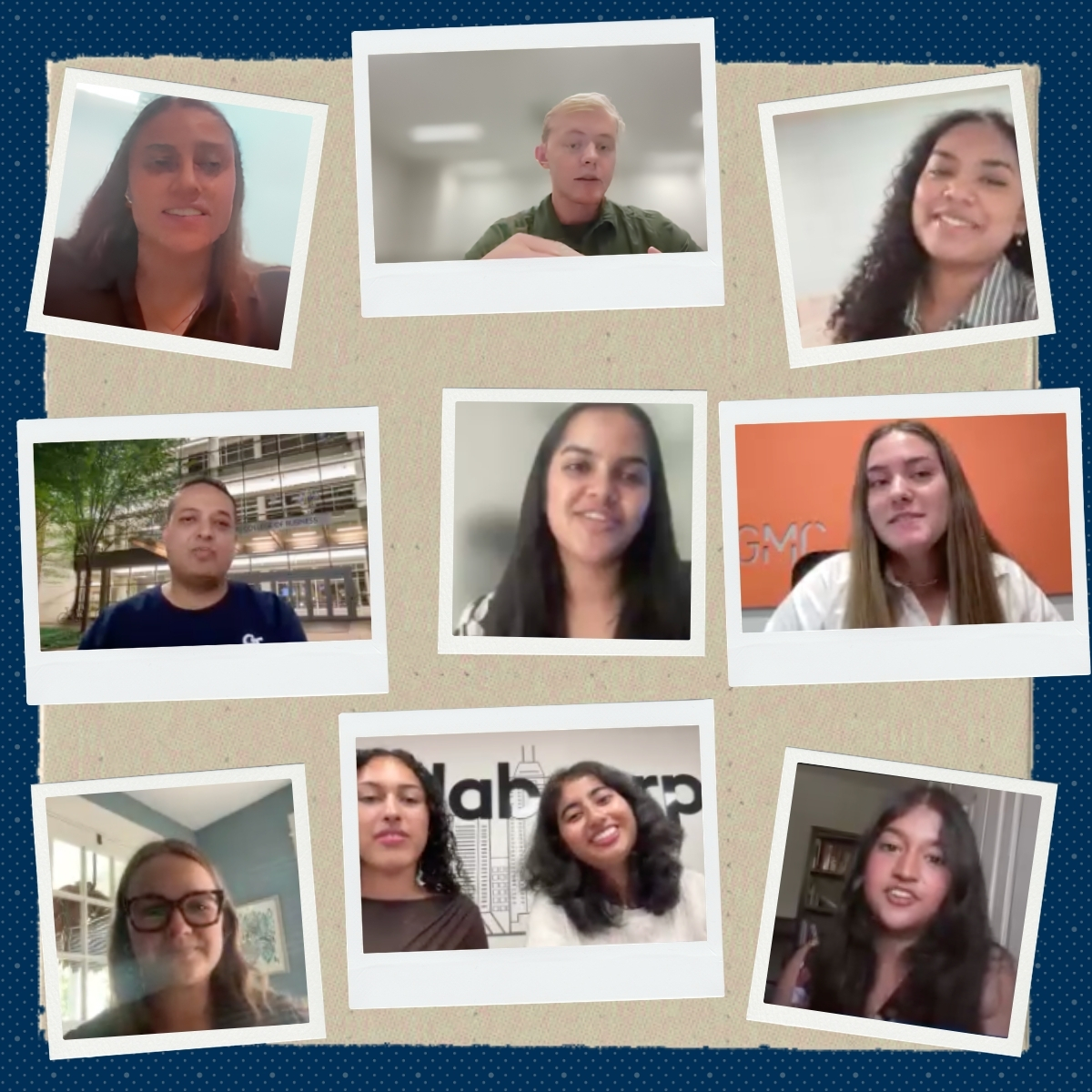
Image Collage from the 2026 Carbon Reduction Challenge

Carbon Reduction Challenge participants present their projects in the Final Expo.

This summer marked the tenth anniversary of the Carbon Reduction Challenge (Challenge). For a decade, college students have volunteered to work with organizations on solving real carbon problems. Co-hosted by the Ray C. Anderson Center for Sustainable Business (Center) in the Scheller College of Business and the Georgia Tech College of Sciences, the Challenge invites students to research opportunities to reduce emissions within the organizations where they intern. Next, they present the business case for implementing a project that can reduce emissions and save money. 

Over the three months of the summer program, students volunteer for the Challenge on top of their regular internship responsibilities – working with mentors and company sponsors to build proposals that are environmentally meaningful and financially defensible. The result each August is a set of projects that companies can act on. 

Since the program’s founding in 2017, the Challenge has served more than 220 students across roughly 60 partner organizations. The organizers administered a career impact survey and found that 75% of survey respondents now work in sustainability-related roles. Respondents also reported that participating in the Challenge gave them a hiring advantage and a practical introduction to corporate sustainability. 

The 2026 Final Expo 

This summer’s program culminated in a virtual Final Expo on August 11, where nine teams presented their projects to an audience of company representatives, sustainability practitioners, faculty, and fellow students. Each team presented its analysis, fielded questions, and discussed pathways to implementation with stakeholders. 

Participating organizations included Arcadis, BetterEarth, Deep Creek Outfitters, General Motors, Goodwyn Mills Cawood, Labcorp, Michael Baker International, Trane Technologies, and Yamaha. The roster reflects a diversity of partners – from global engineering and manufacturing firms to a working family ranch in Montana. 

Together, the 2026 projects represent nearly 7 million pounds of projected CO2e reductions and roughly $1.8 million in projected annual cost savings. 

The judging panel evaluated projects on innovation, feasibility, and potential impact. This year’s judges contributed a mix of academic, policy, and industry perspectives: 

  • Unwanna Etuk is manager of the Investor Network, Shareholder Engagement, and Just Transition at Ceres, Inc. A Georgia Tech alumna, Etuk participated in the Challenge’s inaugural summer cycle in 2017. 
  • Jairo Garcia is an instructor at Georgia Tech, a past Challenge mentor, and director of the Urban Climate Nexus. His work focuses on the environment, health, and climate change. 
  • Zachary Handlos is a senior academic professional and director of the B.S. degree program in atmospheric and oceanic sciences in the Georgia Tech School of Earth and Atmospheric Sciences. He has taught extensively on climate and worked with the Georgia Climate Project. 
  • Ben Jordan is a lecturer in the Jimmy and Rosalynn Carter School of Public Policy at Georgia Tech, senior advisor at Clear Strategy, Inc., and former senior environmental policy leader at The Coca-Cola Company. His work focuses on sustainability and supply chains. 
  • Andy Marshall is a climate tech entrepreneur and executive director of the Georgia Cleantech Innovation Hub. 

The top two awards were presented by McCall Langford. She is a grandchild of Ray C. Anderson and member of the Ray C. Anderson Foundation’s NextGen Committee, which awarded the grant that launched the Challenge. 
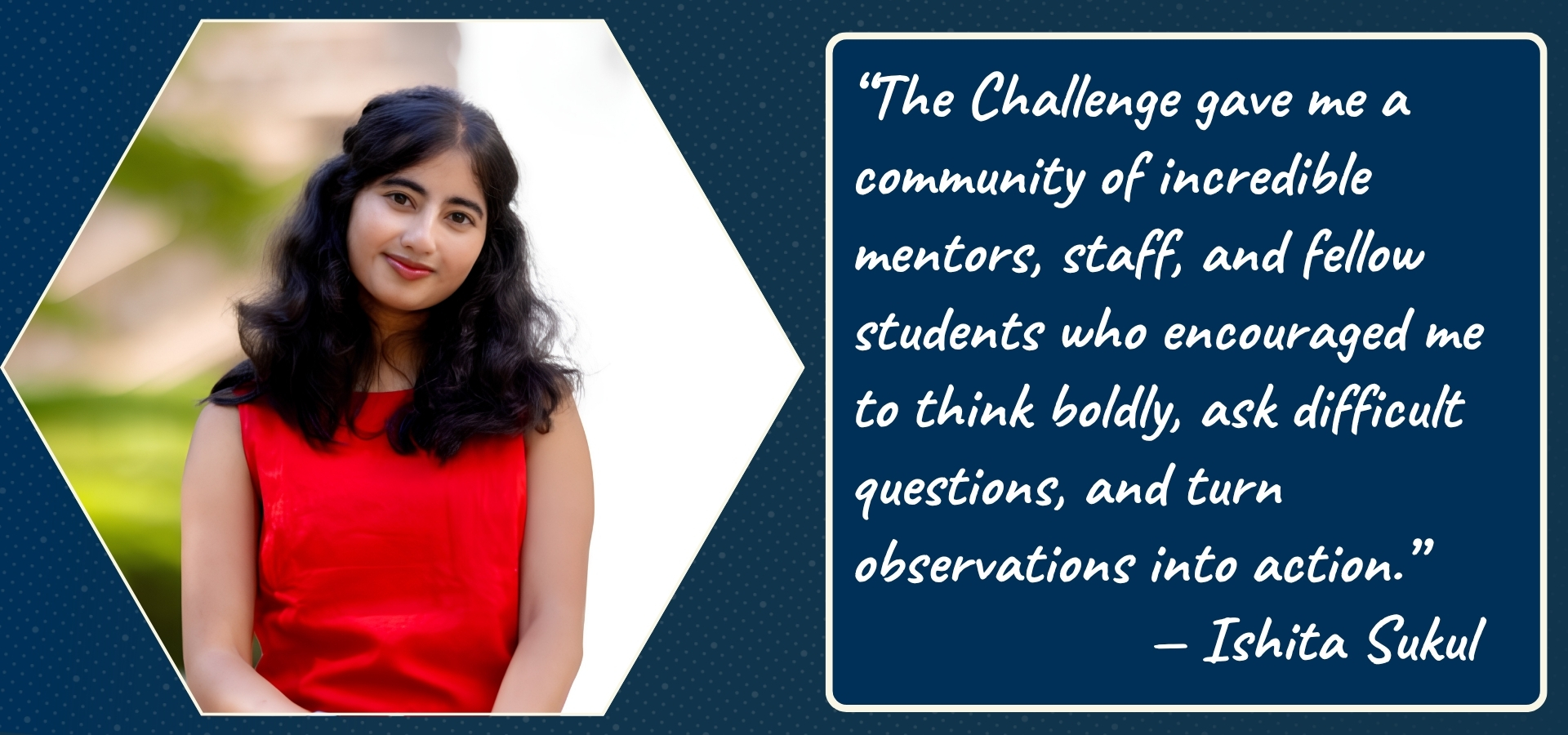
Quote from Ishita Sukul

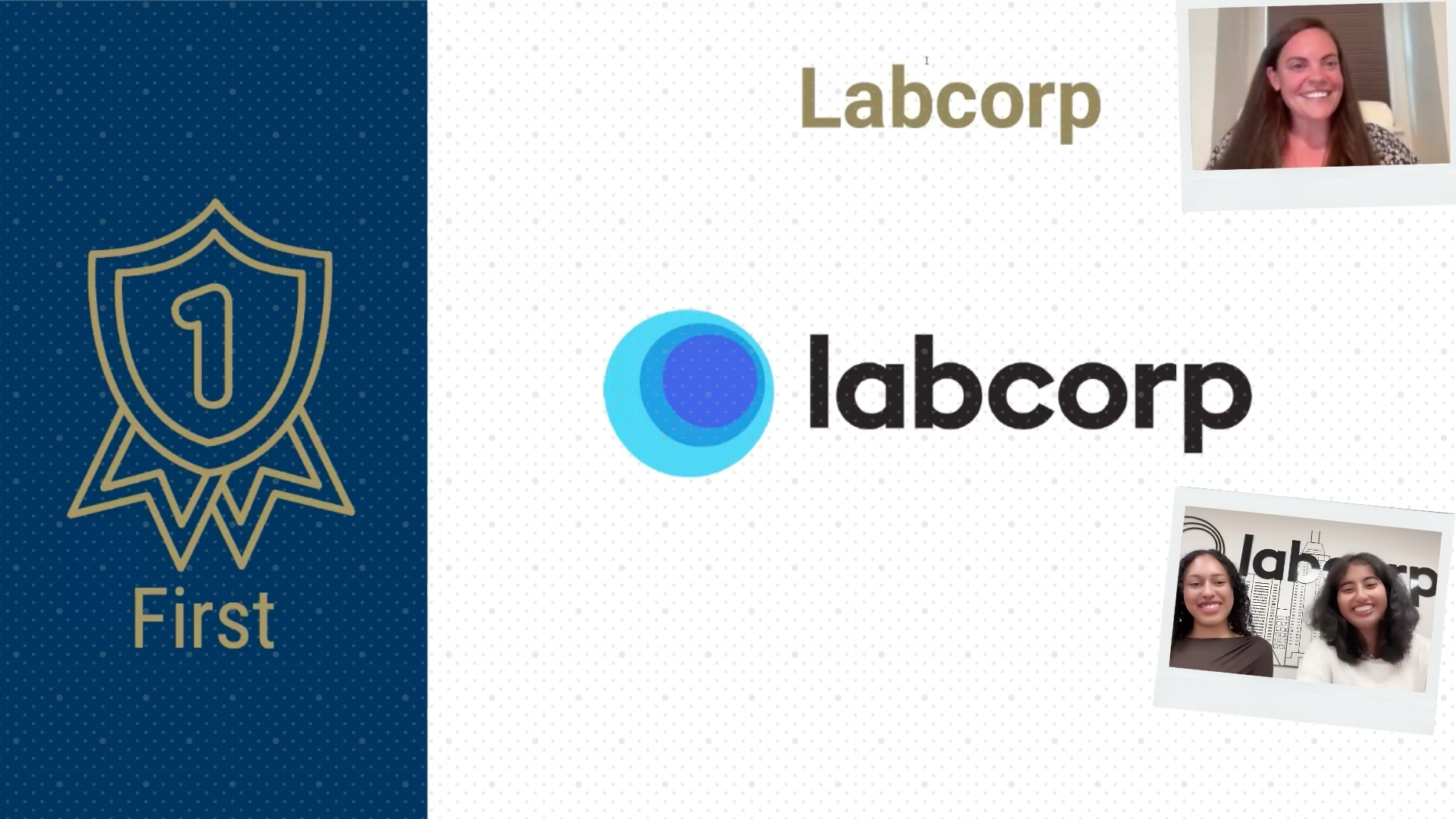
First Place ($2,000): Project Frost 

Partner: Labcorp 

Team Members: Ishita Sukul (rising third-year biology major at Georgia Tech) and Sofia Gaitan (environmental and ecological engineering major at Purdue University) 

The Project: “Project Frost” is a sustainable, closed-loop solution for optimizing dry ice recovery and procurement in Labcorp shipments. 

Second Place ($1,000): Project Smartcharge 

Partner: General Motors 

Team Members: Keerthana Nagula (a rising fourth-year business administration major at Georgia Tech) & Nithya Parepally (a rising third-year mechanical engineering major at Georgia Tech) 

The Project: “Smartcharge: Intelligent Workplace Charging” optimizes electric vehicle charging at a GM location to reduce the energy draw. 

Third Place ($500): Electrify GMC 

Partner: Goodwyn Mills Cawood 

Participant: Sophia Etheredge (rising fourth-year civil engineering major at Georgia Tech) 

The Project: “Electrify GMC” assesses the feasibility of converting the company’s gas-powered fleet to an all-electric fleet. 

Honorable Mention: Ranchers for Recycling 

Partner: Deep Creek Outfitters 

Participant: Martha Parrott (rising third-year chemistry major at Georgia Tech) 

The Project: “Ranchers for Recycling” introduces ideas to reduce waste burning at the ranch. 

Honorable Mention: Project YR-Blue 

Partner: Yamaha 

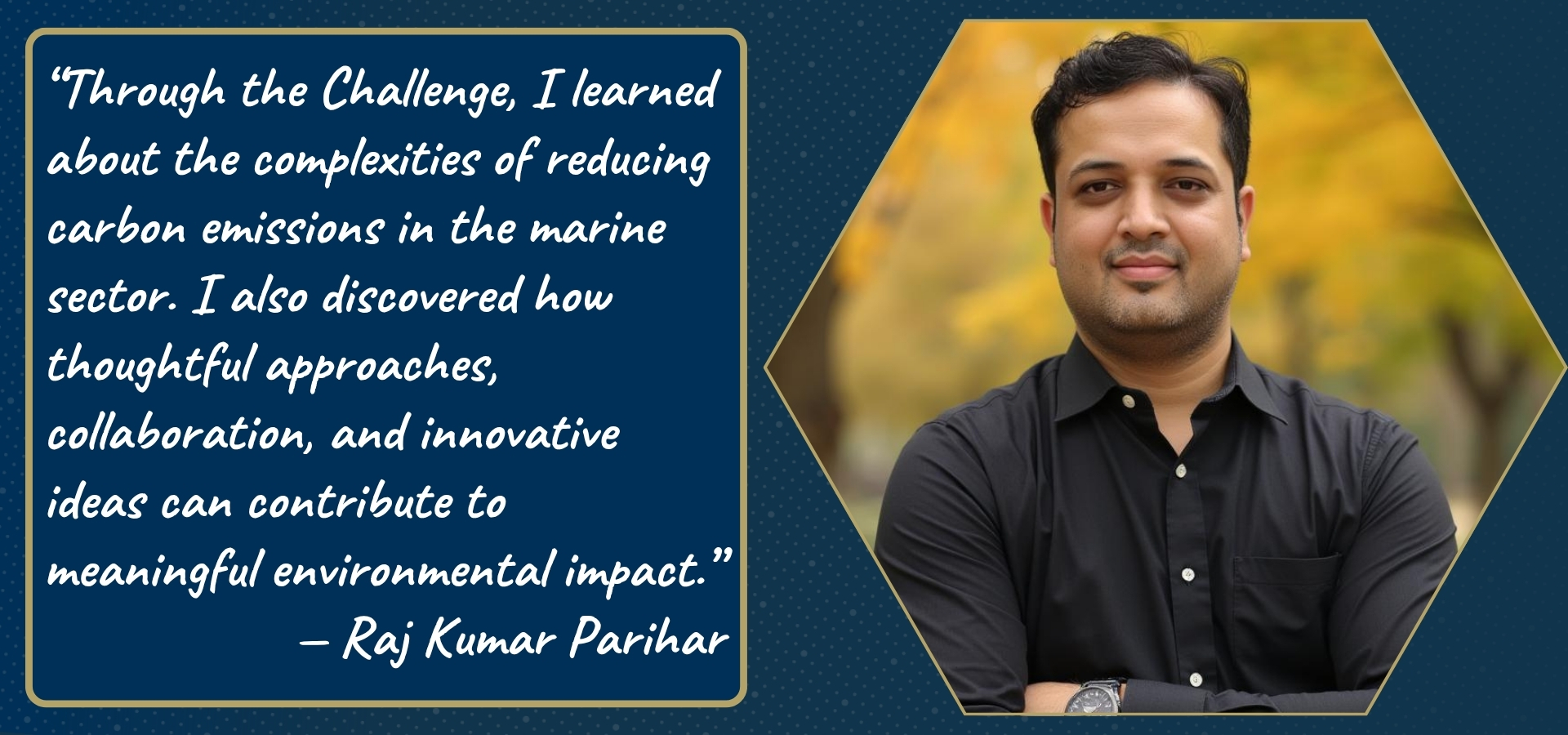
Participant: Raj Kumar Parihar (student in the M.S. in Analytics program at Georgia Tech) 

The Project: “Project YR-Blue” assesses Yamaha’s carbon neutrality goals through their marine restoration goals and the use of marine restoration strategies that map and seed coastal seagrasses. 

 Raj Kumar Parihar Quote

Ten Years of Impact 

All nine teams that participated in the 2026 Challenge demonstrated the creativity and rigor that have defined the program since its first summer. Across a decade, the through-line has stayed consistent: When tasked with identifying a problem and making the case for fixing it, students rise to the challenge, delivering serious solutions across a broad swath of industries. 

Beril Toktay, executive director of the Brook Byers Institute for Sustainable Systems and co-director of the Challenge, reflecting on the milestone, said, “We started the Carbon Reduction Challenge because we wanted students to experience being part of the climate solution – even without a title or a budget. More than 220 students later, what strikes me most is how consistently they rise to the challenge and how creatively they do it. Watching this cohort present, I felt less like we were closing out a decade than opening one.” 

Challenge Co-director Samantha Wilson, senior academic professional in the School of Earth and Atmospheric Sciences, added, “This year’s program featured an exceptionally dynamic and dedicated group of students who presented innovative and creative projects. Participants embraced every single opportunity to learn, adapt, and grow – turning raw inspiration into meaningful, real-world impact.” 

The organizing team also includes Program Manager Kjersti Lukens and two technical mentors – Scott Duncan, senior research engineer in the School of Aerospace Engineering; and Justin Blann, assistant professor in the Scheller College of Business. For more information about students’ presentations and how to get involved, visit the Carbon Reduction Challenge website. 

McCall Langford presents the first-place award to Team Project Frost.
McCall Langford presents the first - place award to Team Project F rost.  


Written by Kjersti Lukens, program manager for the Carbon Reduction Challenge, with Jennifer Holley Lux. 

Generous support from the Ray C. Anderson Foundation makes the Challenge possible. 

Login