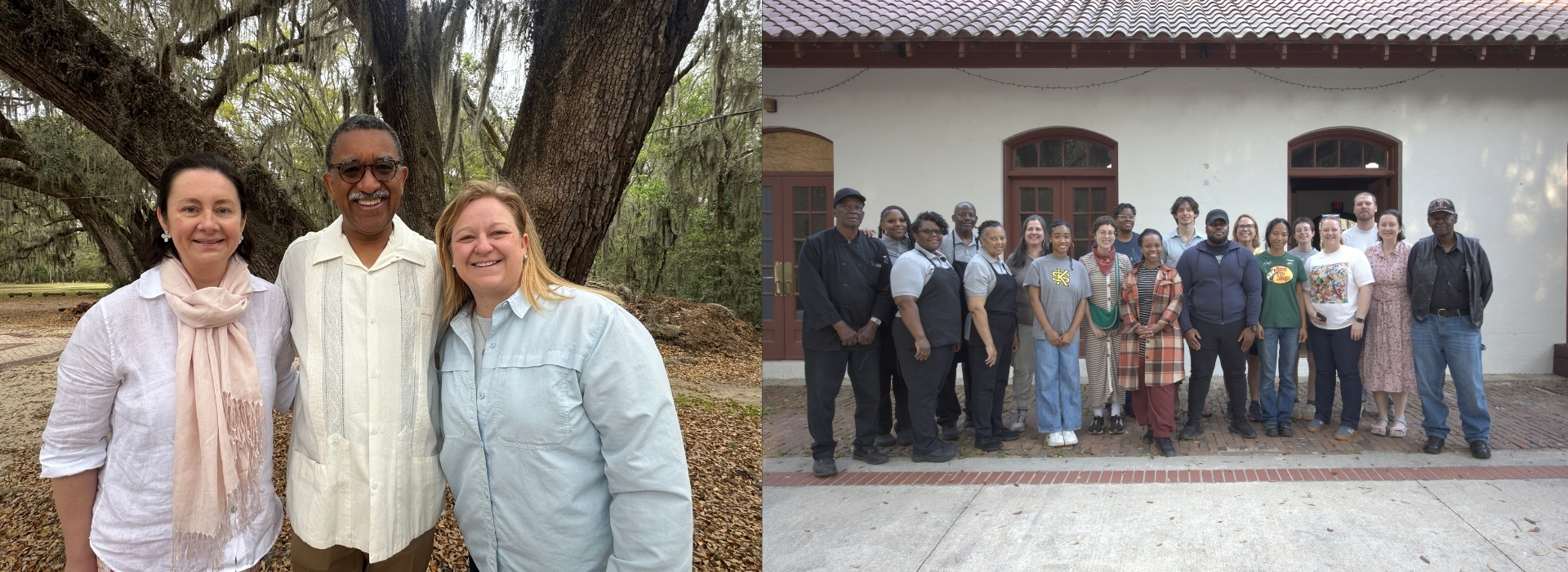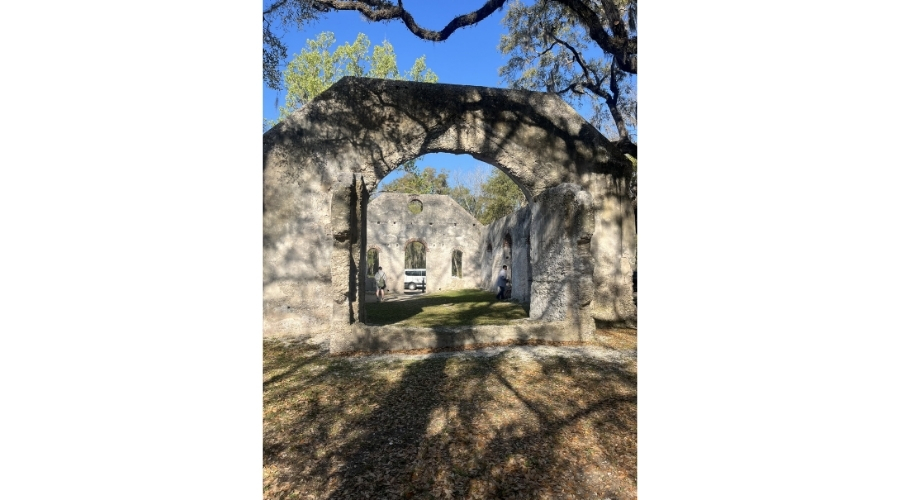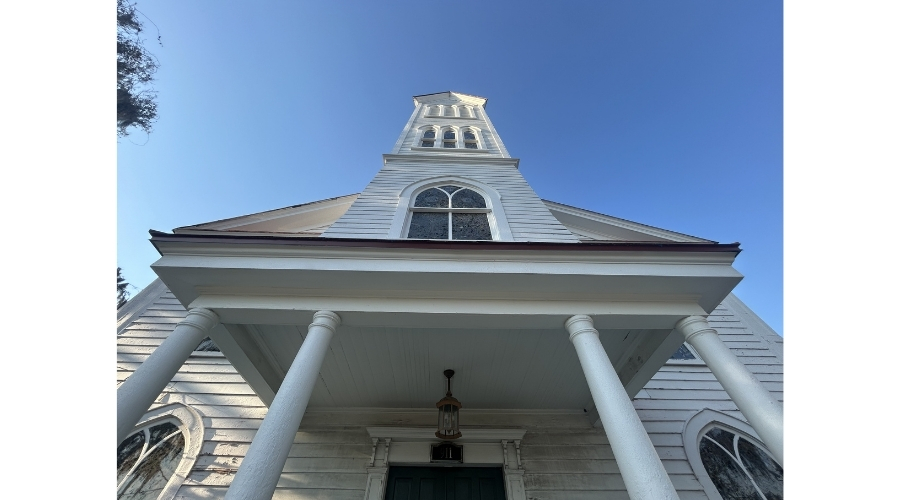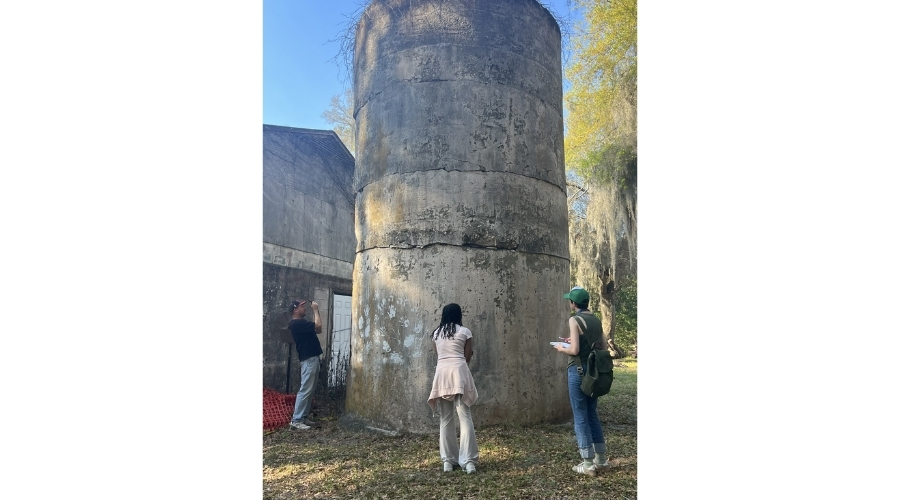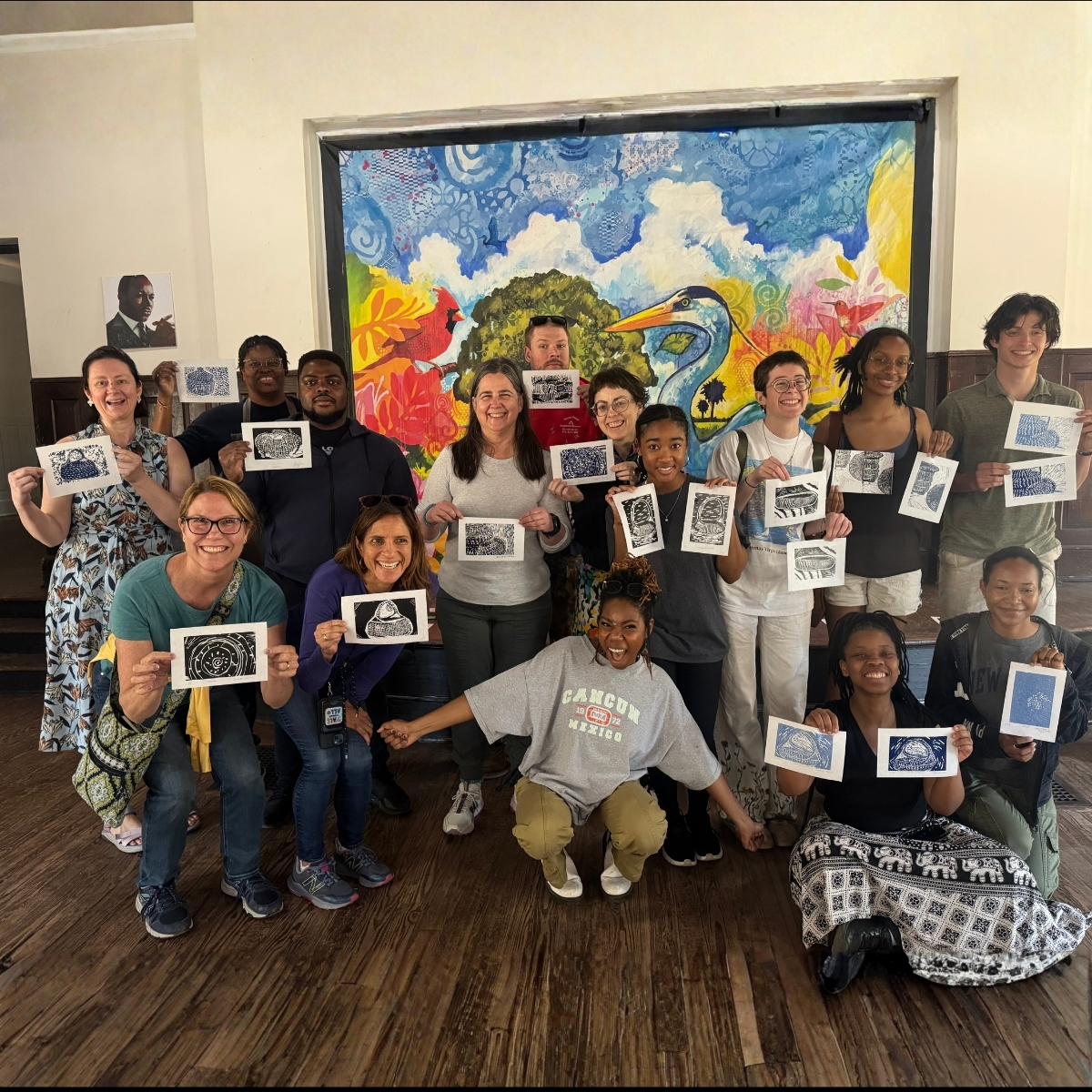
As the Georgia Tech community dispersed for spring break in March, a group of students, faculty, and staff intentionally came closer together. They packed paintbrushes, tools, film equipment, sketchpads, beach bags, luggage, and themselves into two vans and several cars and started driving towards a destination 275 miles southeast.
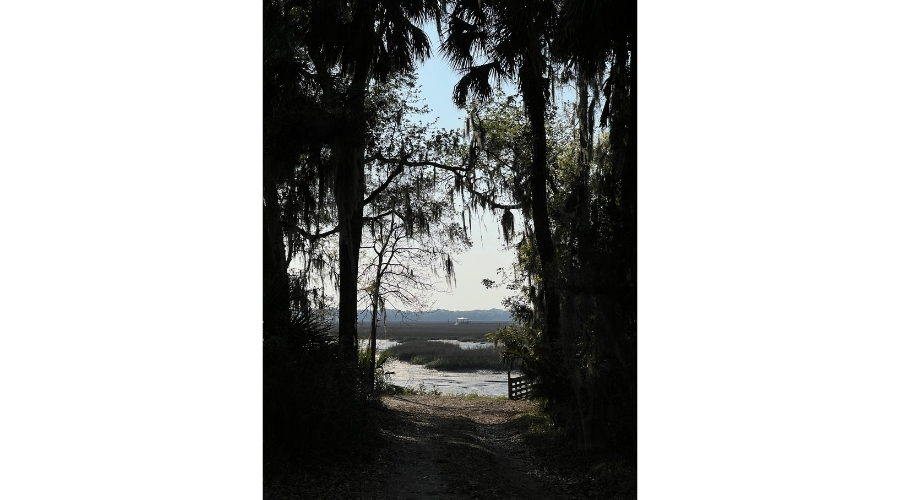
In South Carolina, the reason it’s called the “Palmetto State,” became increasingly clear. Down a long stretch of road running beside train tracks in Varnville, over 100 palmetto trees stand in a neat row – landscape design supported by the Works Project Administration, a vision preserved a century later. The Spanish moss drapes trees in heavier shawls. The wisteria’s vines and cascading purple flowers weave more insidiously through the roadside brush. Reaching St. Helena Island, rolled-down windows welcome marshy, salt-heavy air. Seagulls and sky, rivulets and waves, muck and majesty intertwined. Far from Atlanta.
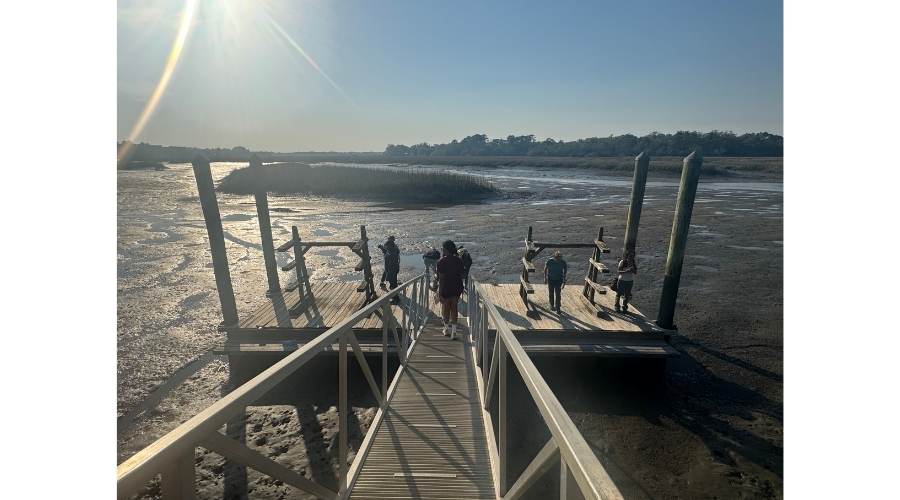
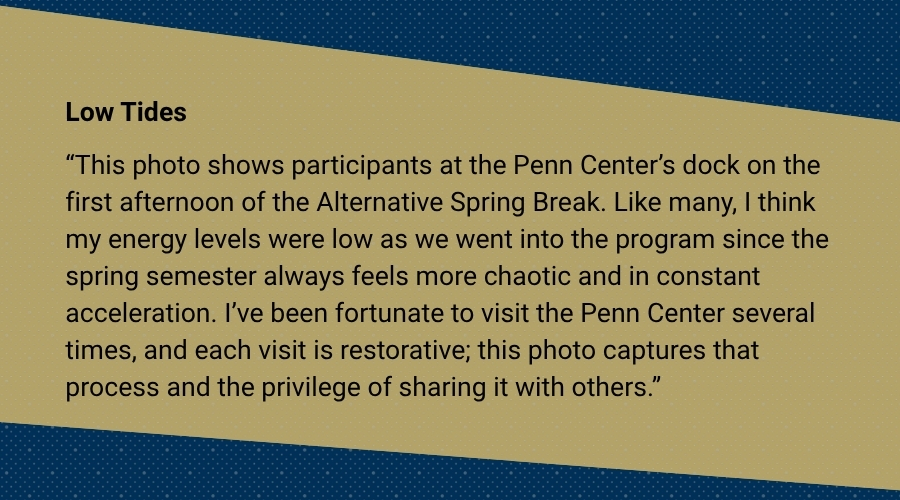
The distance was intentional – a change in environment to spark creativity and mindfulness during the Penn Center Alternative Spring Break. Fifteen students, faculty, and staff had signed up for a four-day, immersive arts residency at the Penn Center National Historic Landmark District. At the Penn Center, American history, Gullah/Geechee culture, and the creative process converged in ways that participants described as transformative.
The program was organized by Jennifer Lux, a writer/editor at the Ray C. Anderson Center for Sustainable Business, and Danielle S. Willkens, associate professor in the School of Architecture. The program was one of eight recipients of a 2025-26 Catalyst Grant from Georgia Tech Arts. The grants support interdisciplinary projects connecting artistic practice with research, education, well-being, and public engagement across campus and the broader community. The grants also reflect Georgia Tech’s commitment to creativity as a driver of innovation. Additional funding was provided by the Scheller College of Business.
The Penn Center program covered participants’ travel, lodging, and workshop fees to ensure that financial barriers would not prevent anyone from taking part.
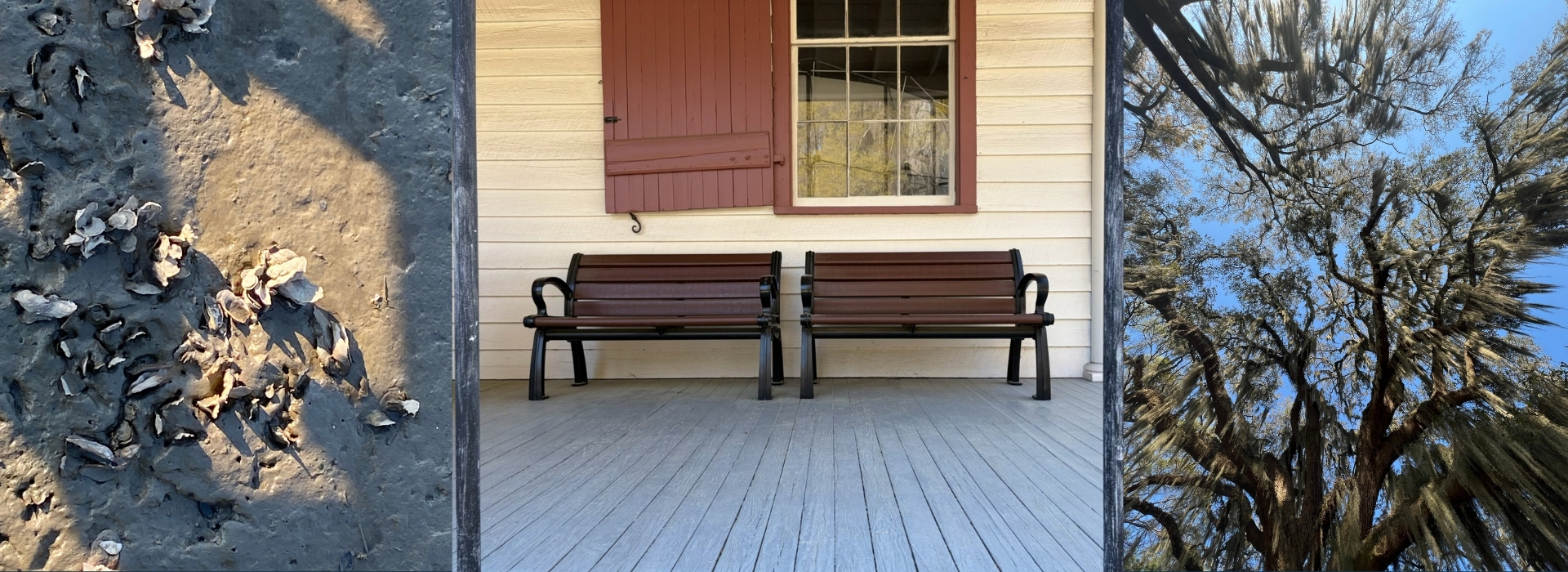
Penn Center: The Site of Learning and Community
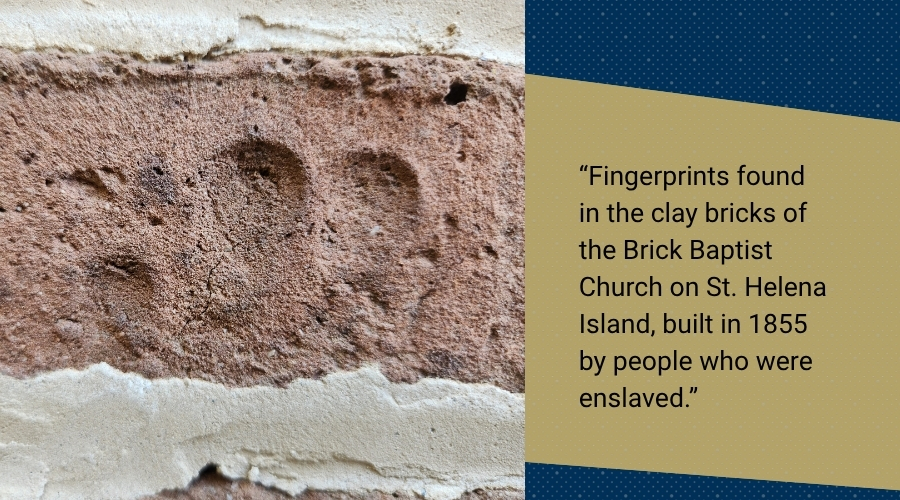
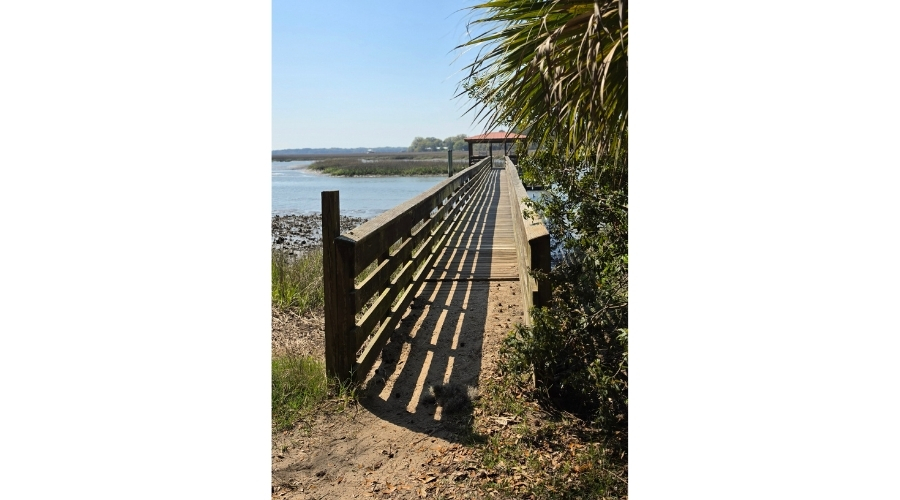
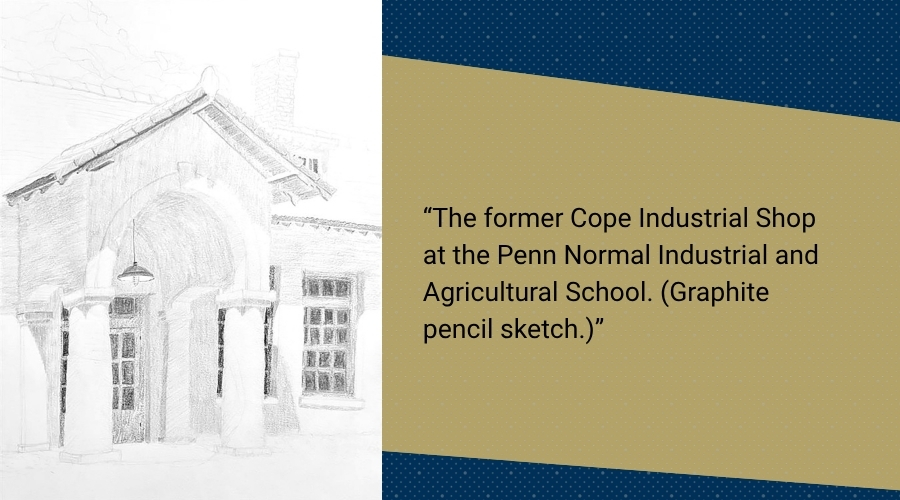
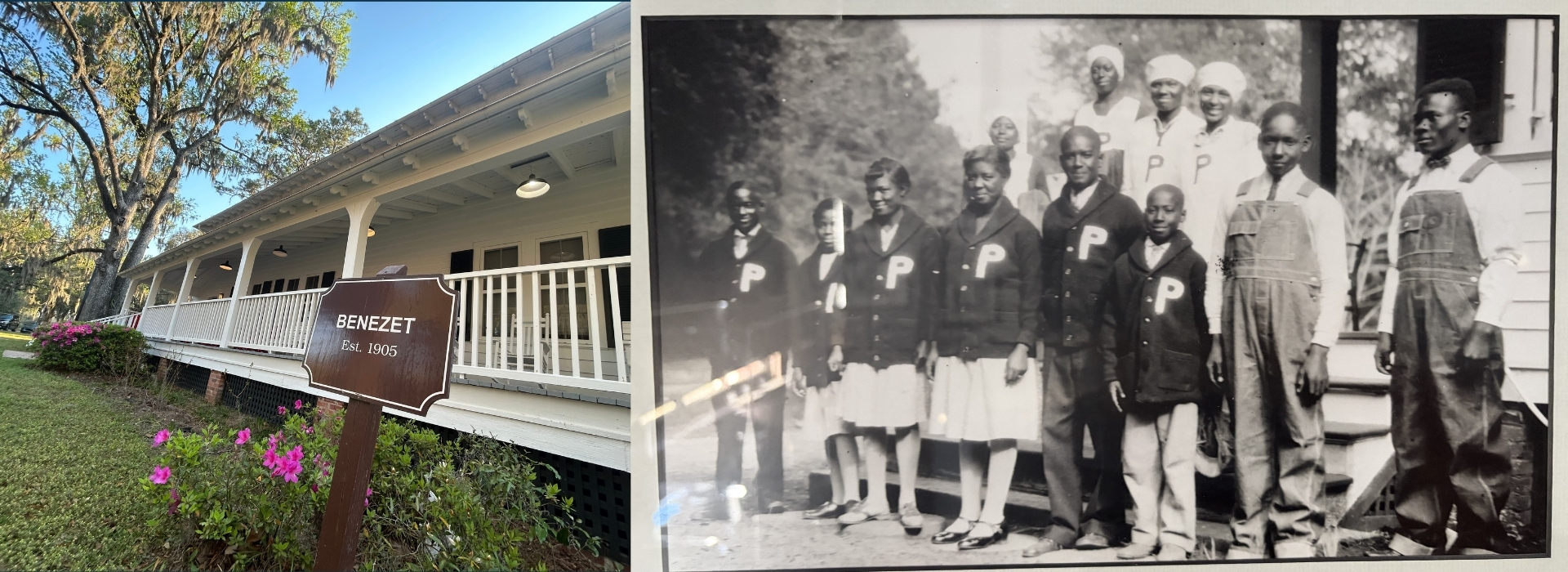
The Penn Center, founded in 1862 as one of the nation’s first schools for formerly enslaved people, carries a legacy that participants felt immediately. Residents lodged at Benezet House, the school’s former female dormitory, built in 1905. They lived and learned on grounds that Penn Center Executive Director Robert Adams described during his welcome remarks as an experiment in Reconstruction-era education and a place for self-making.
The latter phrase stayed with participants throughout the residency. “I thought about the self-determination and community strength that built this powerful legacy,” said Jerushia Graham, museum manager at the Robert C. Williams Museum of Papermaking. “It felt like being wrapped in a spiritual hug and given the imperative to carry it forward.”
For Lucas Nagel, a rising third-year architecture major, the significance of the place was inseparable from the act of making art within it. “My most significant takeaway from this immersive learning experience is the importance of preservation of place through adaptation of use,” he said. “Despite the evolved state of the Penn Center since its founding, I still felt very much a part of the original serenity and purpose that so many others have shared before me.”
Elijah Jeffres, a rising third-year history, technology, and society major, drew a direct line between the Penn Center’s founding mission and the present day. “The Penn School was in many ways a catalyst for successful Black people in a time when oppression and Jim Crow would have held them back,” they said. “I hope supportive communities like the Penn Center can continue to thrive in the twenty-first century.”
Hands-on Learning in Art Workshops
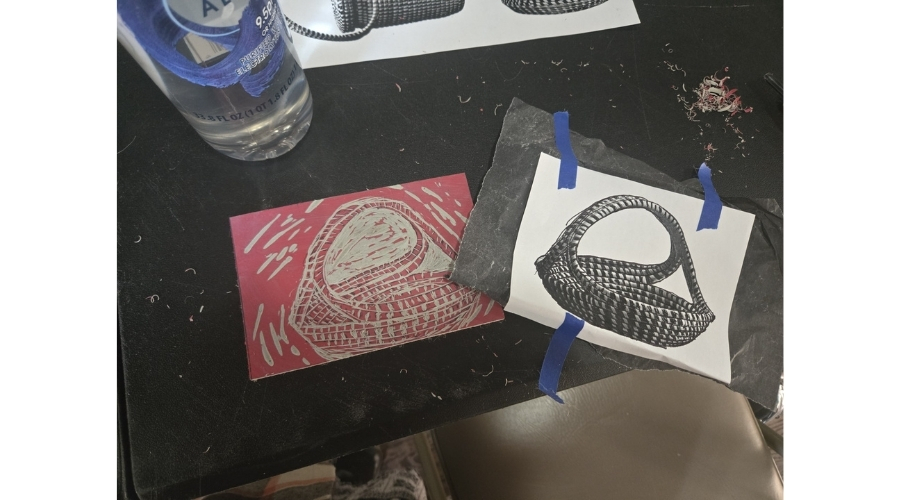
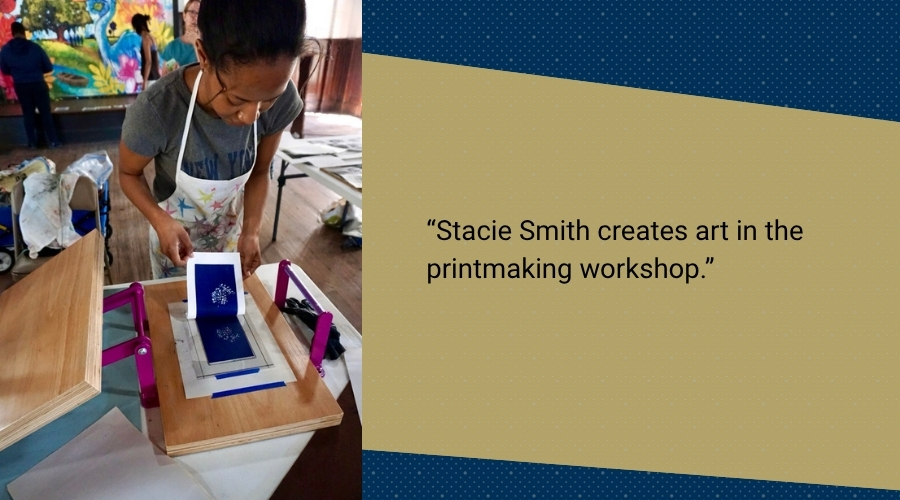
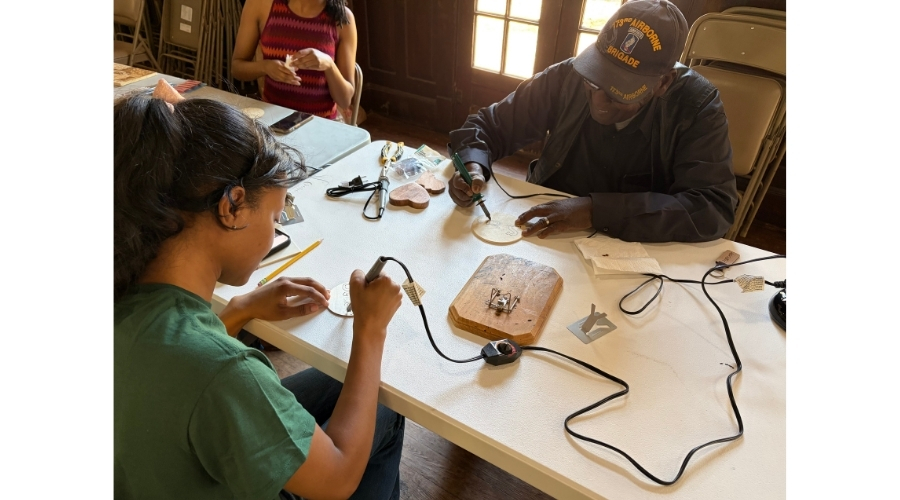
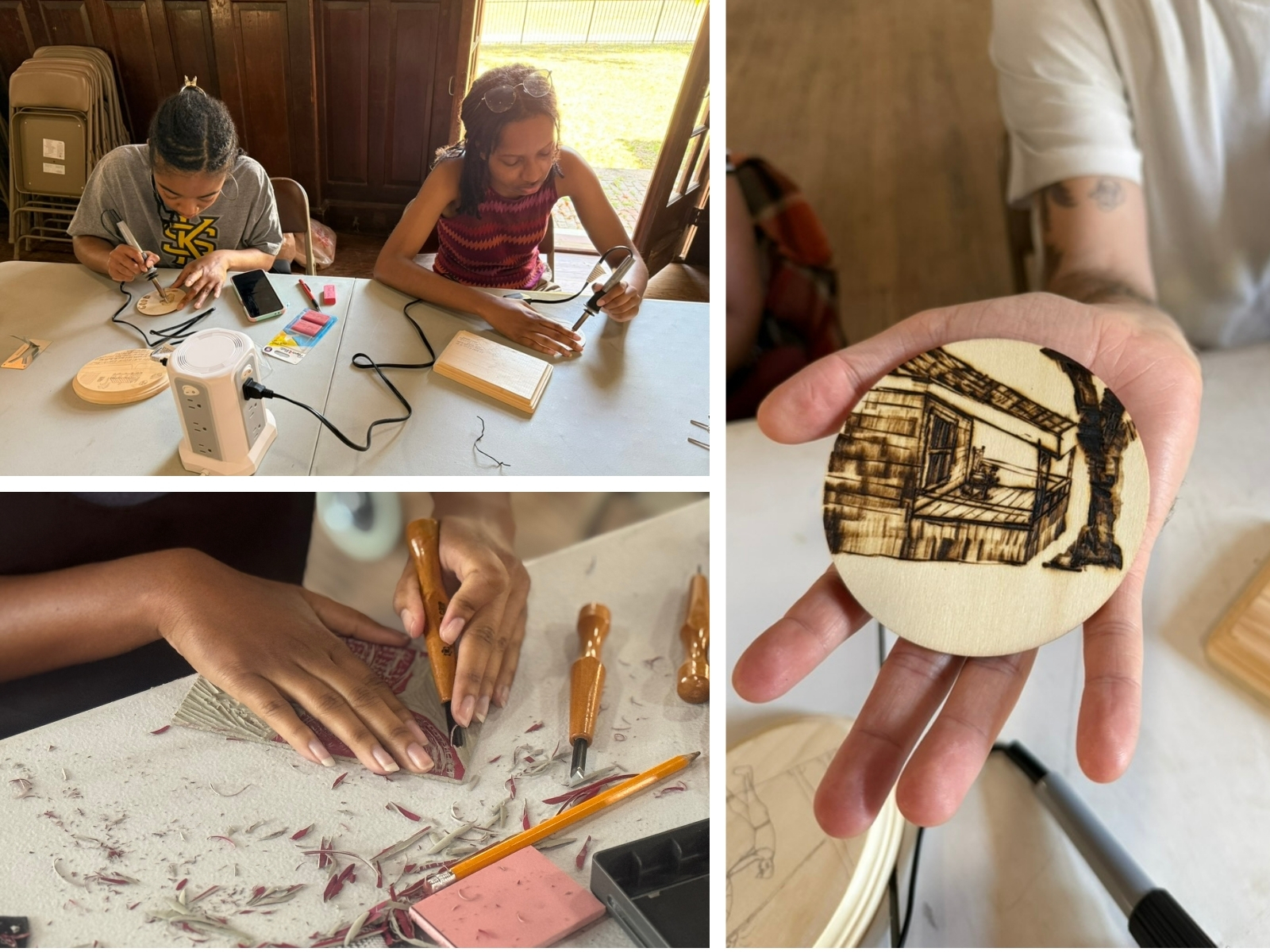
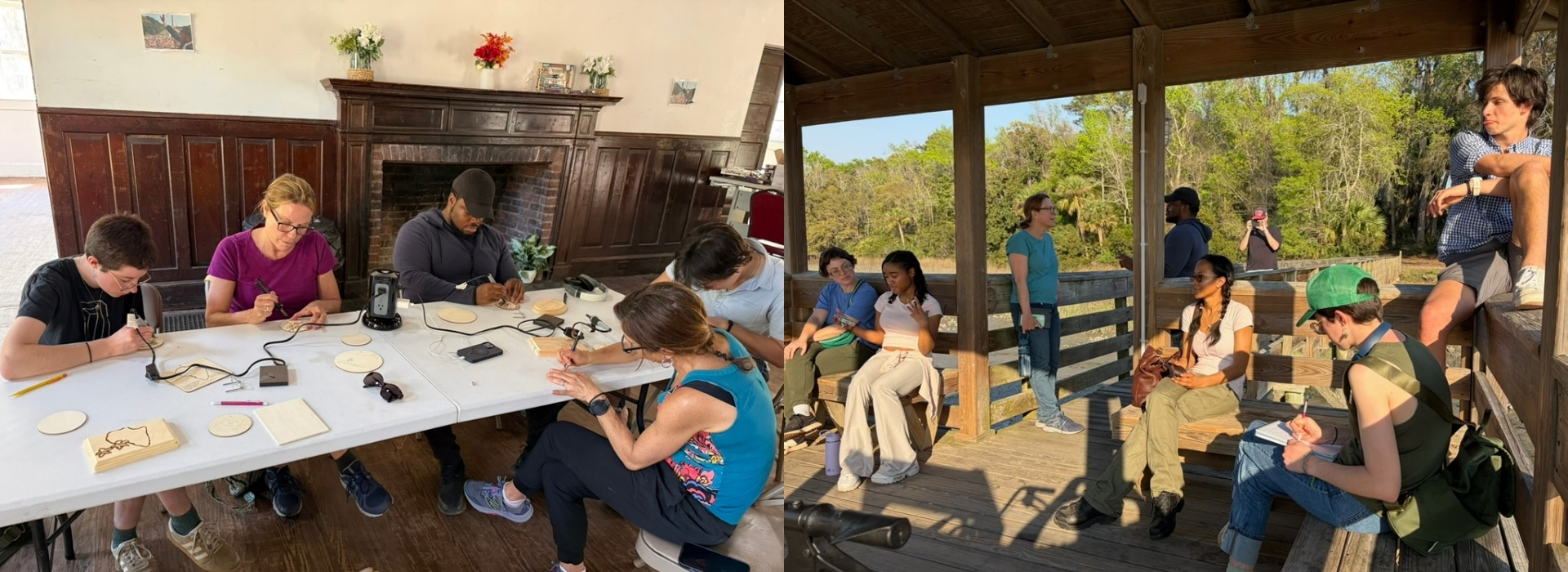
Each full day of the residency included a morning workshop led by an artist with structured time to create. Printmaker Kayla Hall and wood-burning artist Reverend Johnnie Simmons guided participants through their respective crafts, weaving Gullah/Geechee culture throughout.
Hall introduced the group to printmaking using accessible tools and methods, including, as one participant noted, something as simple as a spoon. She incorporated the iconography of sweetgrass baskets, a traditional Gullah craft, into the printmaking exercises. “Kayla led an extraordinary workshop tailored to the full spectrum of printmaking familiarity, from total newbies to established, respected printmakers,” said Stephanie Selvick, assistant director of student development programs in Belonging & Student Engagement. “Some of the strengths were her pedagogical insights that framed what printmaking is philosophically, as well as the affordable tools she presented that made printmaking accessible to a wide range of budgets.”
Simmons brought a different energy to his wood-burning workshop – open, conversational, and unhurried. “He clearly articulated safety protocols and left exploration and design up to the artist,” one participant wrote. “There was no judgment on what was good or not. He only cared that you tried.”
For Ebube Maduka-Ugwu, a master's student in industrial design, the wood-burning session was a highlight. “The wood burning was intensive as it should be,” he said. “It taught me technique and balance.”
Afternoons and evenings were mostly unstructured, offering time for reflection, exploration, individual artistic pursuits, and collaboration between the participants. One evening, for instance, a spontaneous stop-motion animation project occurred in Benezet, to the delight of the makers (all newfound acquaintances) and onlookers alike.
Dissolving the Hierarchy
Perhaps the residency’s most frequently noted outcome was what happened when the titles and roles of campus life fell away. The program was designed as a non-hierarchical, non-evaluated environment – and participants felt the difference immediately.
“Frankly, at first I had no idea who was student, staff, or faculty,” said Diane Alleva Cáceres (PhD IAST ’15), a lecturer in the Scheller College of Business and the Sam Nunn School of International Affairs. “This was a great way to start because we had no labels. I saw everyone as an artist and was eager to learn more about each person’s art form.”
Selvick observed that the mentorship that emerged from this environment was neither formalized nor assigned, but genuinely reciprocal. “Insight and genuine, grounded connection flowed in multiple directions: between faculty and students, artists and participants, and community members and visitors,” she said. “I do believe this dynamic deepened learning and engagement from all participants.”
For Nagel, the departure from his usual social circle proved unexpectedly meaningful. “Being in such a diverse group opened the doors for me to engage with a broader artistic community than what is frequently populated by architecture peers and instructors. This interdisciplinary melding challenged my definition of ‘value’ in art and architecture outside of established standards of curriculum and practice,” he said. “Through impromptu conversations with students, staff, and faculty, I found myself feeling more like an adult rather than a student.”
Jeffres echoed that sentiment. “I enjoyed talking with the faculty and staff who had a few more years of experience making art and working,” they said. “They had great advice and stories, and I quite enjoyed how social and open everyone was with each other.”
Rest as a Foundation for Creativity
The residency’s pacing was deliberately unhurried, built around long mornings in workshops and open afternoons for making. The balance of scheduled and unscheduled time had a measurable effect on participants’ well-being. Selvick noted that her stress levels dropped and her sleep increased over the course of the four days. “This shift makes clear that rest is not separate from being productive, but foundational to it,” she said. “It cannot be overstated how critical this reprieve from intense academic pressure is for student participants, especially going into the final exam and graduation season.”
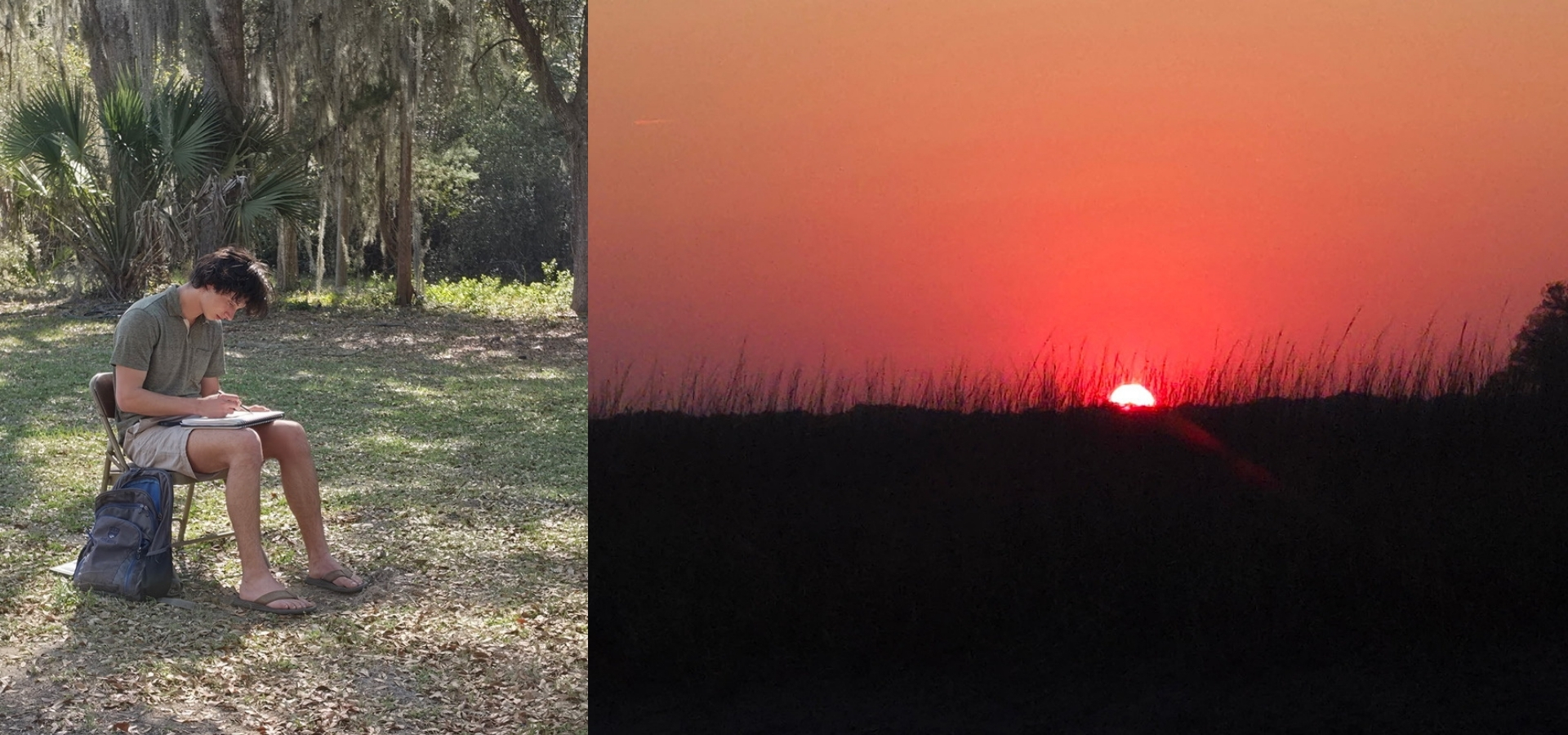
For Nagel, a single afternoon captured what the residency made possible. “The air was warm, and the breeze rustled the trees as birds chirped,” he said, describing a plein air sketching session on the grounds. “At a certain point as I took a step back, I realized how lucky I truly was to be in that moment: no stress, seemingly endless time, and all the materials I needed to pursue a creative form I rarely have time for but truly treasure.”
Aura Carroll, a rising third-year architecture major, found something personal in the landscape and community of St. Helena Island. “As a Black woman, I recognized that the Gullah/Geechee culture in the end was so similar to my culture,” she said. “I am deeply grateful to this trip for reassuring me that no matter how far I feel I have gone, I will always find myself in the unknown.”
A Model Worth Repeating
The program received twice as many applications as it had capacity to accept – a signal, organizers say, of genuine demand across the Georgia Tech community for immersive, non-traditional programming that brings students, staff, and faculty together outside their everyday roles.
Several staff members who could not be accommodated in the main cohort chose to attend as auditors, paying a nominal fee out of unit or professional development funds. Representatives from the Center for Education Integrating Science, Mathematics, and Computing (CEISMC), which focuses on K-12 STEAM education, and Georgia Tech Belonging & Student Support saw direct relevance to their own programs – a ripple effect that exceeded organizers’ expectations.
Organizers hope the residency becomes an annual offering. Future iterations they envision could include a workshop in Gullah/Geechee indigo dyeing, guided tours of sites connected to the history of Robert Smalls in Beaufort, and excursions onto the water to explore the region’s maritime ecosystem.
A public exhibition of participants’ artwork is planned for the 2026–27 academic year.
Willkens, who co-led the program, captured what made the experience singular: “There are surprisingly few opportunities for students, faculty, and staff to interact outside of structured gatherings. Meeting people from different parts of campus – it was an eye-opening experience to see the true heart and talent on our campus. These kinds of events need to happen more.”