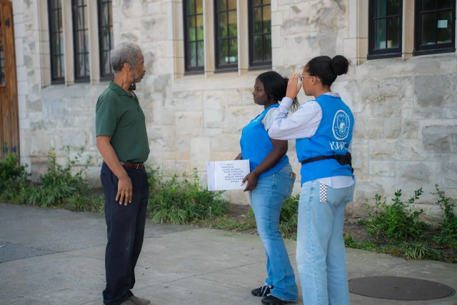
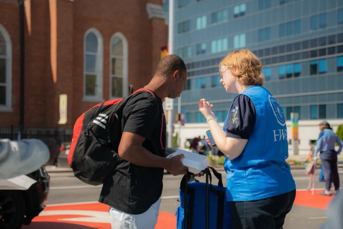
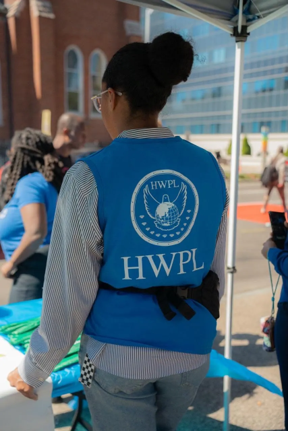
That Saturday, volunteers came together to distribute care packages to Atlanta’s unhoused communities. At first glance, it might seem like the purpose of the day was simply to provide people with resources they needed. But as I experienced Home for Humanity firsthand, I realized that the heart of the program was never just what was inside the package. It was what happened when we handed it to someone with a smile, stopped to have a conversation, listened to their story, and simply chose to be present. A care package can provide something someone needs, but connection can remind someone that they are seen.
That lesson stayed with me throughout the day. The Little Guy Foundation’s mission is rooted in creativity, connection, service, and the belief in our shared humanity, and Home for Humanity brought those values to life in a way that felt incredibly real. We were not simply moving from one task to another. We were talking, listening, laughing, sharing, and creating moments of connection. I began to understand that social impact is not always about doing something enormous. Sometimes, it is about being willing to stop for another person and recognize their humanity.
What makes Home for Humanity especially powerful is the role that creativity plays in creating community. Through art, music, poetry, conversation, and service, the program creates space for people to express themselves and connect with others. Art becomes more than something we make; it becomes a bridge between people and a way to communicate, express, and be heard. That idea resonated deeply with me because my role as a Media, Marketing & Fundraising Intern is also centered around communication. Whether I am writing a weekly newsletter, helping promote a program on social media, creating awareness around the Foundation’s work, supporting fundraising efforts, or talking with students at a tabling event about our international trips, I am helping tell a story and invite other people into it. Home for Humanity showed me what those stories ultimately connect back to: people.
Being part of this program also changed the way I think about my own role as a Social Impact Fellow. Before this experience, I often thought about social impact through the question, What can we do for a community? Home for Humanity made me ask a different question: What can we build with a community? That shift matters. It reminds us that service should not be one-directional. It should create opportunities for people to connect, participate, express themselves, and feel that they belong.
And perhaps that is the most powerful meaning behind the words Home for Humanity. Home is not always four walls or a physical place. Sometimes, home is a feeling. It is being welcomed. It is being recognized. It is having someone stop and listen. It is knowing that your story matters. On September 26, I saw that idea come alive through seemingly small moments: a package handed over, a conversation started, a smile exchanged, a story shared, and volunteers choosing to show up for their community.