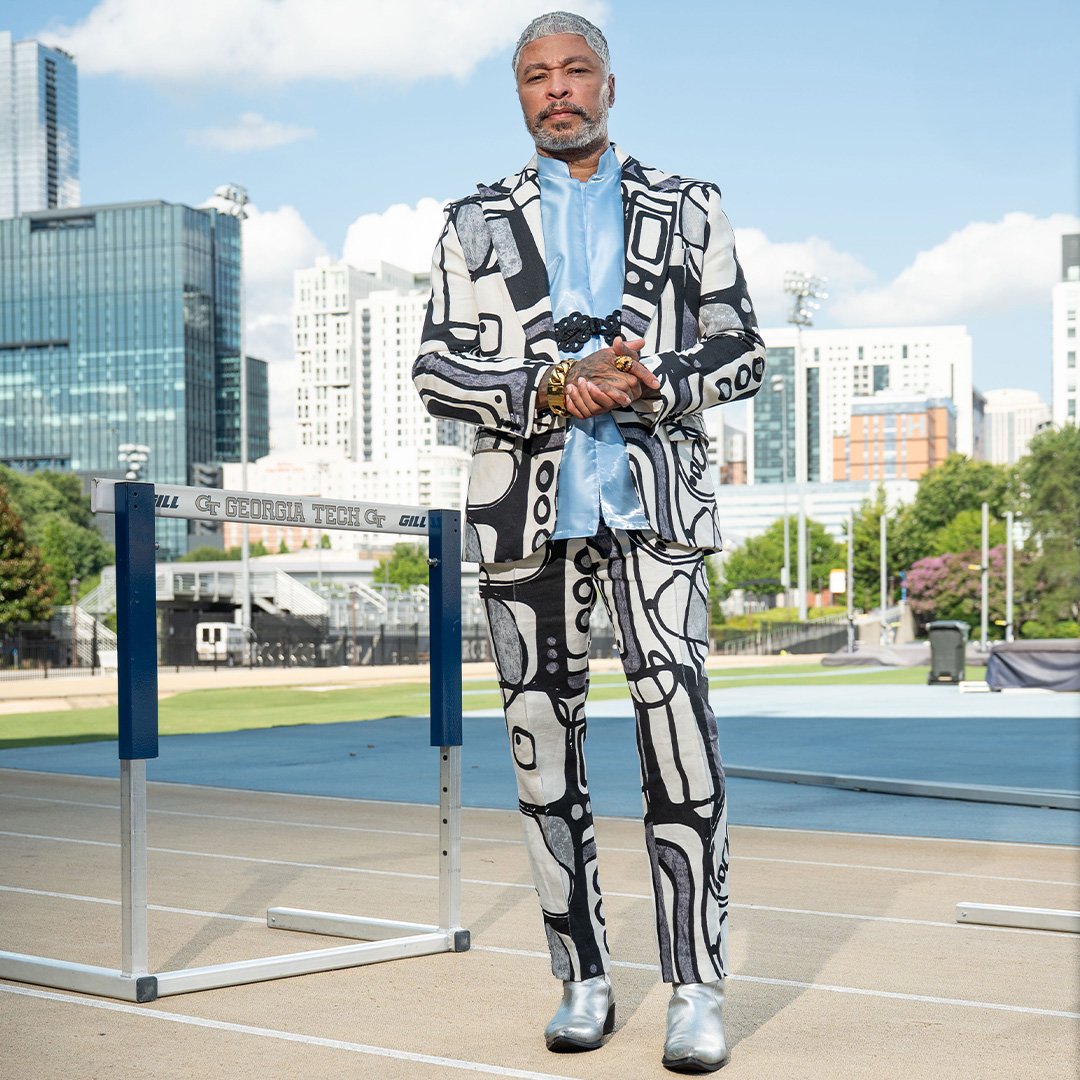
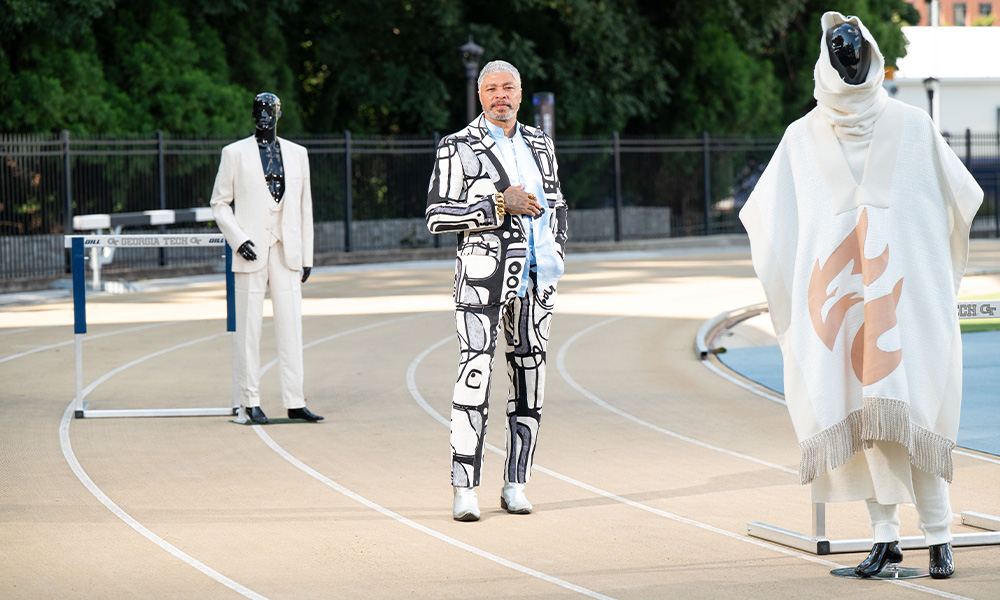
Octavius Terry, BM ’96, knows exactly what goes into crossing a finish line. The three-time national champion and nine-time All-American spent years training for races decided in seconds. But the lessons he learned at Georgia Tech had little to do with speed and everything to do with navigating life’s inevitable pivots.
Terry was a high school senior when he first considered Georgia Tech. He’d already accepted an academic scholarship at North Carolina State, where he planned to walk on to the track team. Importantly, NC State offered him distance from the Atlanta neighborhood he grew up in.
“I knew coming out of the projects that I needed to be an overachiever so that I could help my family and my community,” he said.
Terry also felt he needed space to grow into himself and out of the expectations that the only way to achieve success was to become a doctor, lawyer, or engineer.
“My parents wanted me to be a great person in society,” Terry said. “I remember feeling like I was going against the grain when I wanted to run summer track so I could get better and earn a scholarship.”
A track meet hosted by Georgia Tech in March of his senior year offered a chance to prove that time spent honing his athletic abilities had been worth it. It became a defining moment, showing him how setbacks can sometimes create unexpected opportunities that lead to success.
The Detour to Georgia Tech
Terry went into the meet determined to catch the eye of Georgia Tech’s track coach Grover Hinsdale. His strategy: Win the 110-meter hurdles and beat a runner who had already accepted a spot on Georgia Tech’s track team. He felt confident at the starting blocks. He cleared the first hurdle. Then, for the first time that year, Terry hit the second hurdle and went down hard.
“I’m almost crying,” Terry recalled. “This was my last opportunity to get a track scholarship. My coach gathered me up and told me that because I didn’t finish the race, I was disqualified. I thought to myself, ‘This is over.’”
But because of the disqualification, Terry was eligible to enter another race. His coach put him in as the anchor leg of the team’s 4x400-meter relay. They went on to set a high school record.
Days later, Terry received a life-changing phone call.
“On April 1, April Fool’s Day, I received a call from Coach Hinsdale,” Terry said. “He said that he didn’t get a chance to see the whole meet, but he did see me in the 4x400. He told me I was definitely a 400 hurdler and wanted to talk about me coming to run at Georgia Tech.”
The race Terry almost didn’t run became the one that opened a door.
One Hurdle at a Time
 |
 |
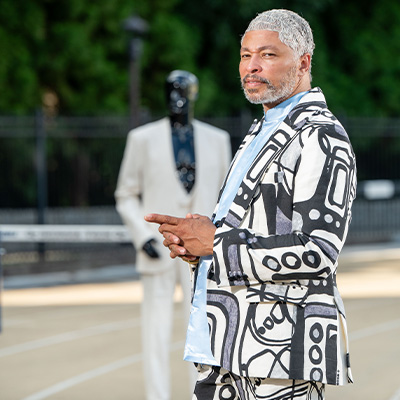
Terry accepted a scholarship to Georgia Tech. He went on to become a three-time NCAA national champion, winning the 400-meter hurdles once and the 4x400-meter relay twice. Gold medals filled his four-year collegiate record.
Coach Hinsdale became a second father to Terry, shaping not only the athlete he became but also the leader he would grow into. The lessons he learned on the track carried into every stage of his life and career.
Hinsdale taught him to approach each hurdle as its own challenge, focusing on the task immediately ahead rather than the obstacles still to come. Run the race you've prepared for, he would say, and trust that a strong finish will follow. It was a mindset Terry carried long after his days in the starting blocks were over.
“If you focus on the whole track, the finish line can feel very far away,” Terry said. “I think a lot of people struggle because they’re so focused on the result that they never concentrate on the next step in front of them. Every segment of a race is different, just like every stage of life. You have to take each hurdle as it comes, trust your preparation, and keep moving forward.”
In 2006, Terry was inducted into the Georgia Tech Sports Hall of Fame. More than three decades later, footage of his 1992 NCAA 4x400-meter championship race, arms pumping and legs churning, remains a vivid reminder of one of Georgia Tech's greatest athletic achievements.
From Track and Field to Finance
In the classroom, Terry majored in business management and envisioned a career in finance working with athletes and entertainers. A temporary job at a bank near campus became a permanent role after his manager discovered he had a knack for spreadsheets and data analysis.
When bank leaders learned Terry was also training as an Olympic hopeful, they featured his story in a company video. The exposure created opportunities for advancement after graduation, and Terry found himself in Los Angeles attracting wealth management clients with his easy manner and quick intelligence.
For 11 years, Terry built a successful banking career and achieved the version of success he once envisioned as a young man growing up in Atlanta.
Reinvention Is a Skill
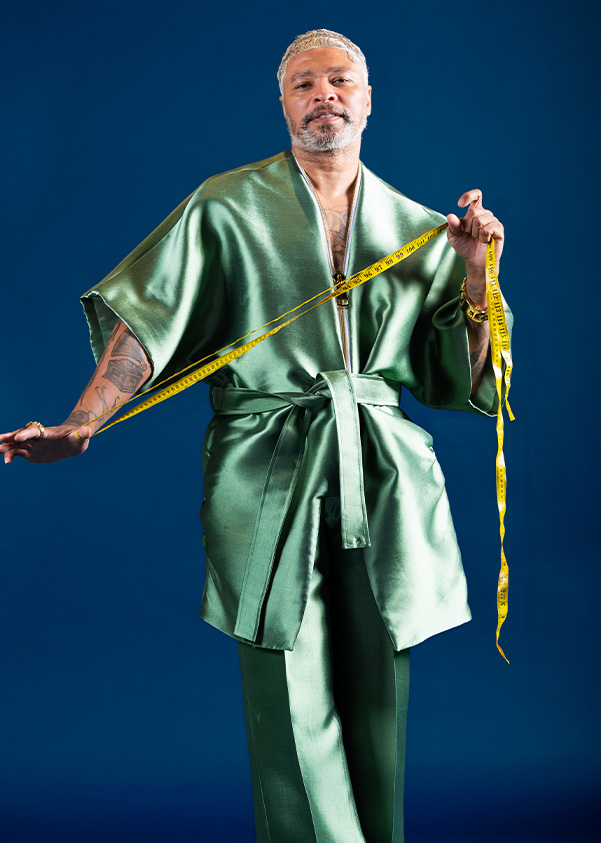
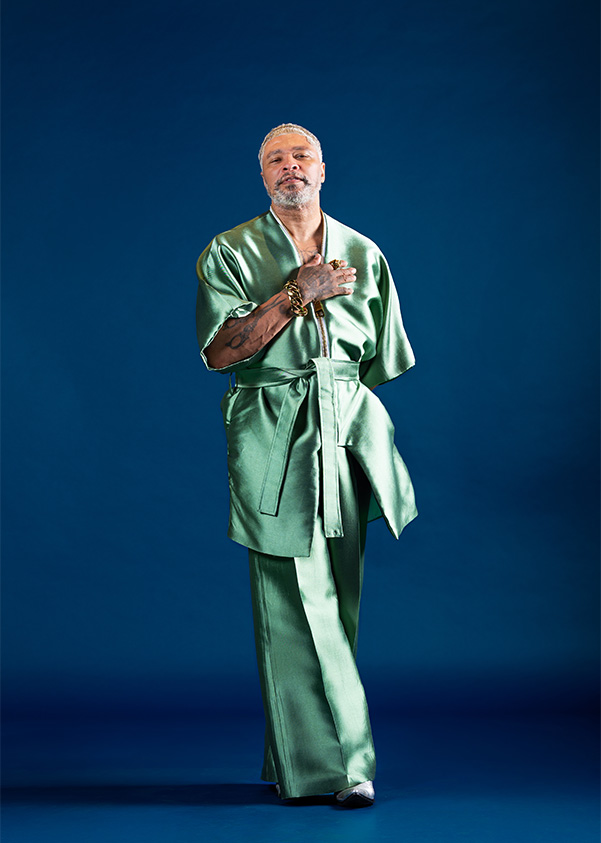
Living in Los Angeles in his mid-30s, Terry found himself surrounded by filmmakers, musicians, and artists. Everyone seemed to be pursuing the work they had always dreamed of doing. When a friend asked Terry what dream he’d given up on to pursue banking, he heard himself say: "I wish I had been a fashion designer."
Soon after, a banking restructuring presented an unexpected opportunity. Terry accepted a generous severance package and used it to fund a new beginning. On March 5, 2010, at age 36, he walked away from a successful corporate career, sat down at a sewing machine for the first time, and started over.
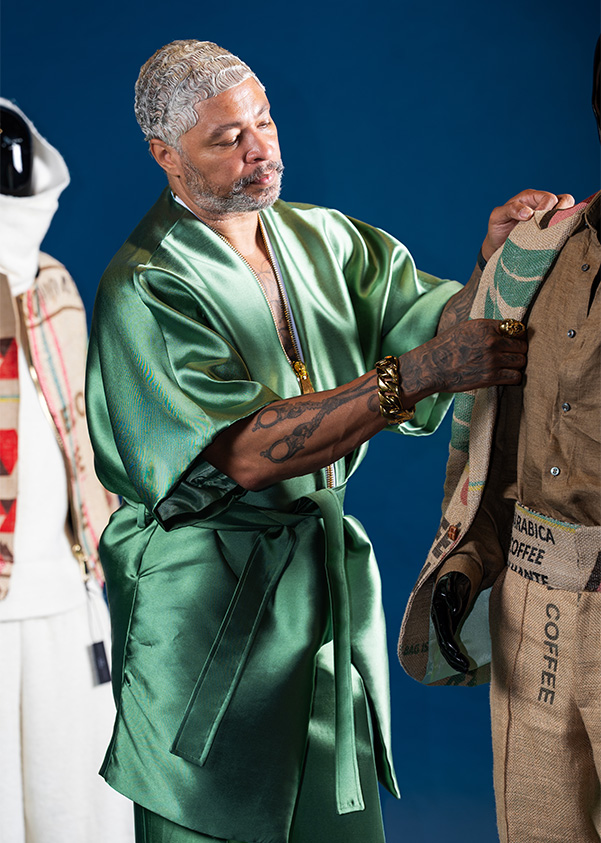
Just weeks after sewing his first project, a pillowcase, Terry was designing a t-shirt for Miley Cyrus and a jacket for Queen Latifah. He earned a prestigious scholarship at the Fashion Institute of Design & Merchandising and built a brand that blended creative vision with business acumen.
"Georgia Tech taught me about business. From there, I learned to marry my creativity with commerce," Terry said.