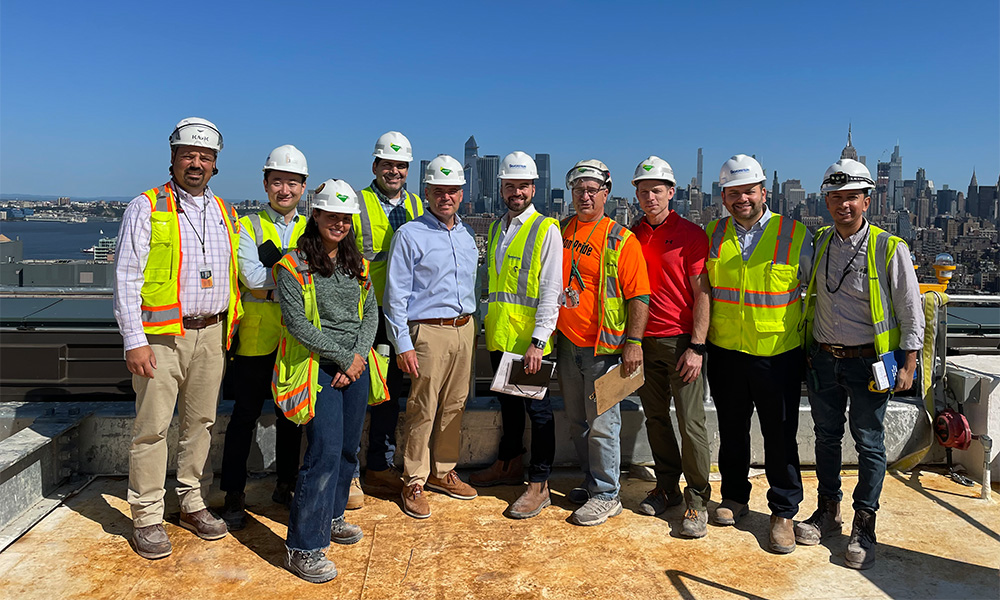
When Corey Conklin was 24 years old, he attended Silverstein Properties’ ribbon cutting of the Four Seasons Hotel in Tribeca, Manhattan. Standing in the room as Larry Silverstein spoke, Conklin had a moment that would quietly shape his career.
Silverstein, founder and chairman of Silverstein Properties and one of the most influential figures in American real estate, was the developer tasked with rebuilding the World Trade Center following Sept. 11, 2001.
“I remember sitting there in complete disbelief,” Conklin recalled. “Two years into my career, I was in New York at the Four Seasons ribbon cutting listening to Silverstein speak. I had no idea how to pull it off, but I knew I wanted to work for a developer like that someday.”
Nearly a decade later, Conklin made that vision a reality.
Now a senior associate at Silverstein Properties in New York City, Conklin works on some of the most complex commercial real estate development projects in the country. His path from Atlanta to New York was deliberate and shaped in meaningful ways by his experience in the Georgia Tech Scheller College of Business Evening MBA program.
Beginning With Building Blocks


When Conklin was a kid, he didn’t just play with Lego bricks; he built cities meticulously refined to be bigger, taller, and closer to real-life skylines. As he grew older, his parents nurtured his instincts with trips to open houses and construction sites, where his father, who worked in real estate, often asked for his thoughts on what might be improved. That creative encouragement at a young age stuck with him through high school and into college.
At Georgia State University, Conklin double-majored in real estate and managerial sciences, completing six internships across different sectors of the industry. It was during his final internship with Atlanta-based developer Carter that everything came together.
“That’s when I fell in love with development,” Conklin said. “Seeing how the vision, the creativity, the market research, the planning, and the construction all pieced together into something tangible — that’s when it all made sense.”
After joining Carter full time, Conklin gained early exposure to large-scale urban redevelopment projects. But a move into construction loan asset management at Trimont Real Estate Advisors broadened his perspective.
“I started working on construction loans for a $10 billion portfolio,” Conklin said. “A lot of it was in New York City, and that’s when I realized I wanted to be there — not just living there but building there.”
Why an MBA at Scheller
Conklin had always planned to pursue an MBA, but his New York ambitions accelerated the timeline.
“I was intimidated by the level of talent I saw in New York,” he said. “The people I met there were incredibly accomplished. I knew that if I wanted to move there, I needed an MBA for my own personal and professional growth.”
He considered several top programs but ultimately chose Georgia Tech’s Scheller College of Business and its early-stage, emergent real estate program.
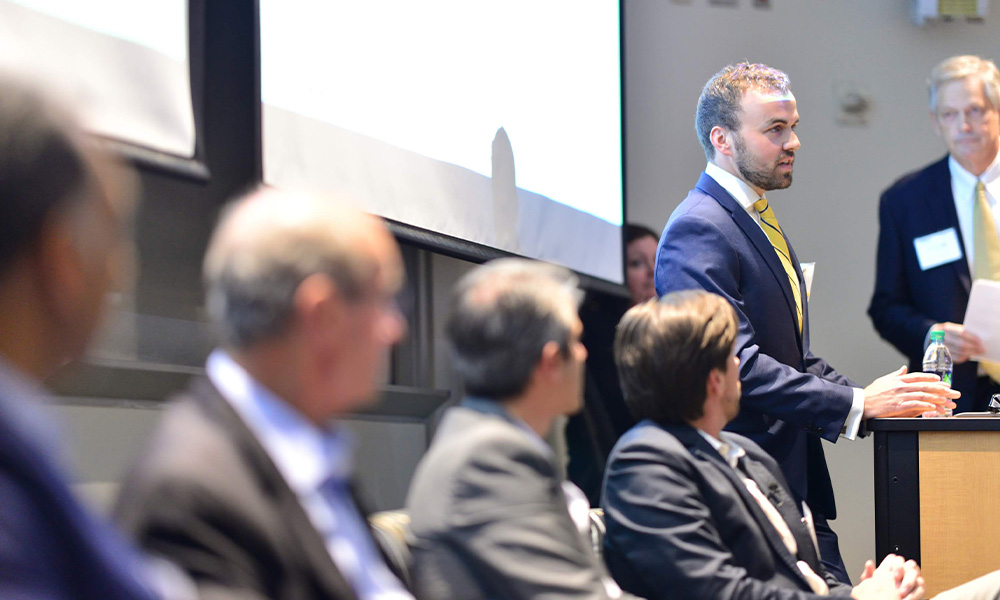
“I liked that the program was still growing and open to evolving,” he said. “I was drawn to the College by the opportunity to help shape what Scheller could become in real estate.”
As an Evening MBA student, Conklin balanced a full-time career with Evening MBA coursework, ultimately earning concentrations in real estate and sustainability. He took multiple real estate practicums and credits much of his growth to hands-on, applied learning.
“The practicums are where the MBA program really clicked for me,” he said. “Everything felt connected to real-world decision-making.”
One of his lasting contributions to Scheller came outside the classroom. Alongside his faculty mentor, Barry Branch, Conklin helped launch the Georgia Tech Real Estate Club — the first real estate club chartered at the institutional level.
“Barry was already working with the College of Design and other faculty members to expand real estate’s presence at Georgia Tech,” Conklin said. “He really pushed me to think bigger. It wouldn’t be just a Scheller club, but something that could bring everyone, including architects, engineers, and designers, into the conversation.”
With a foundation built on rigorous coursework, leadership, and grit, Conklin was ready to launch his career in New York.