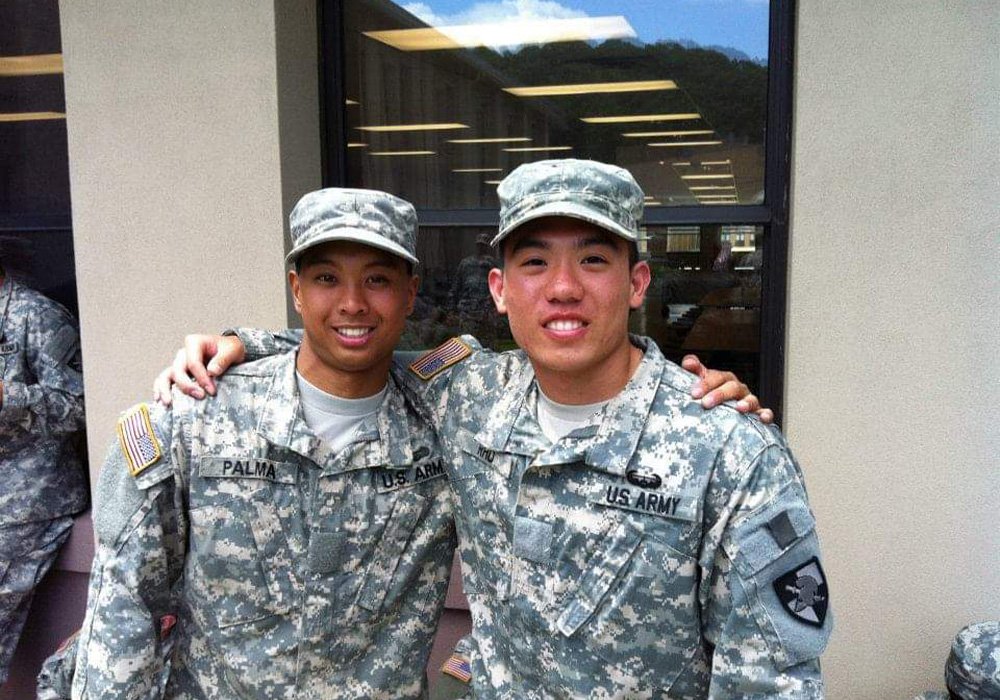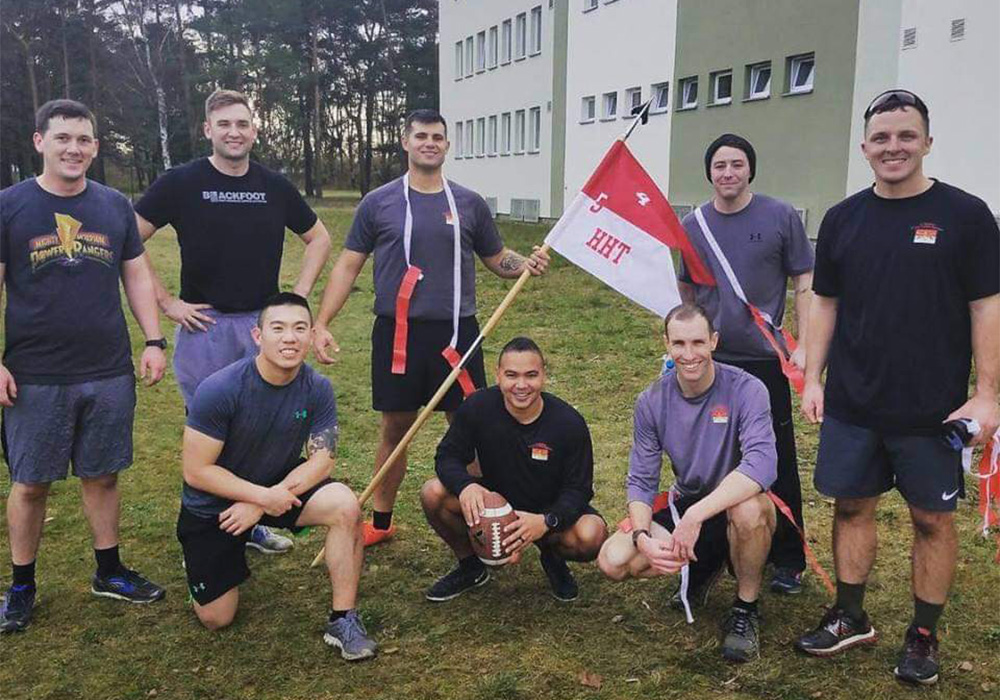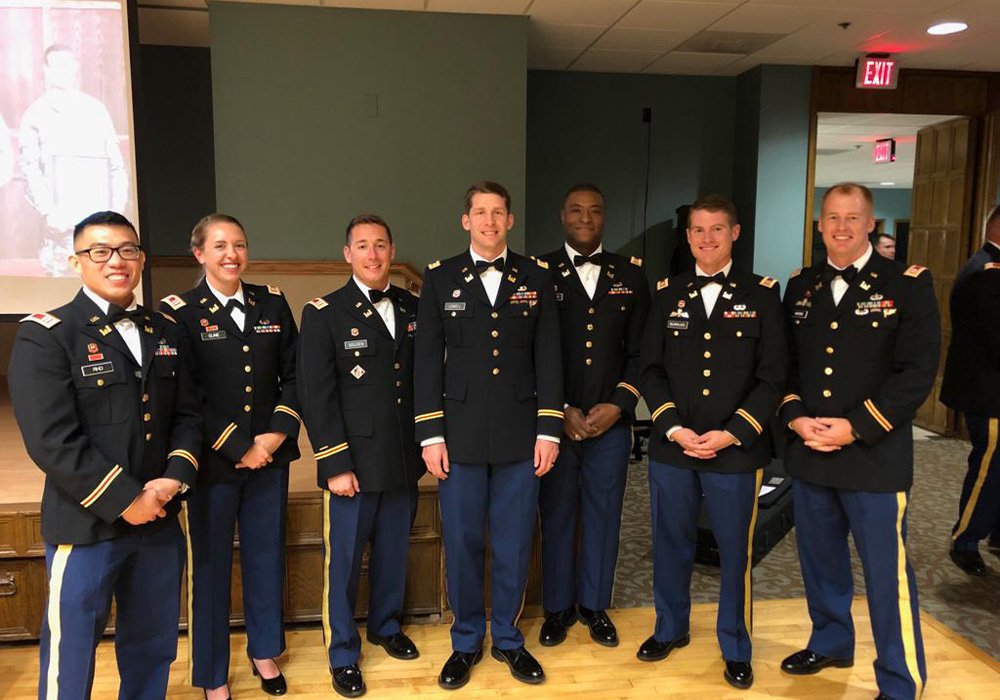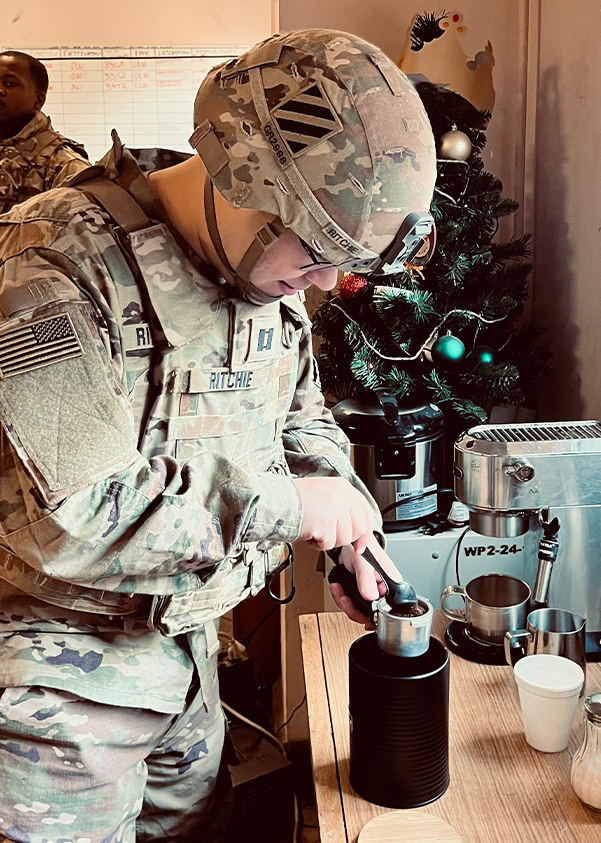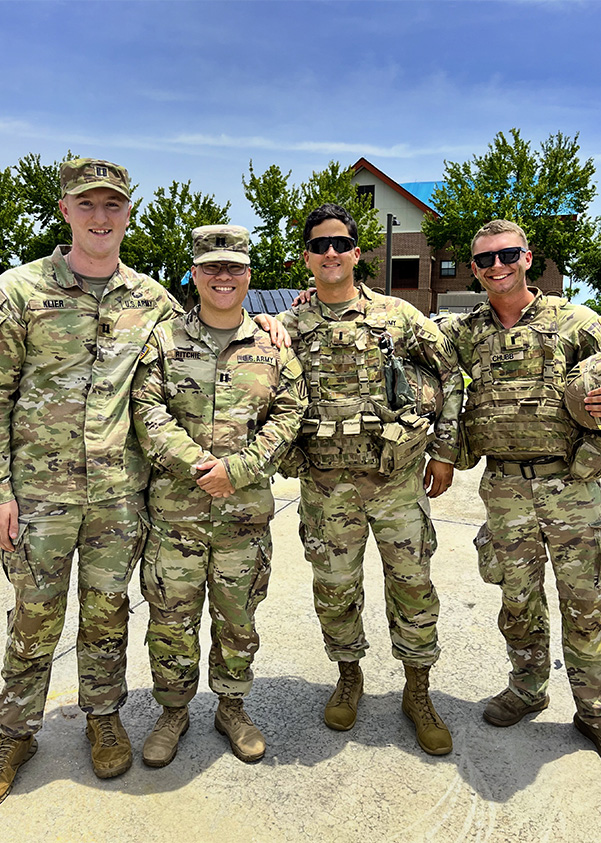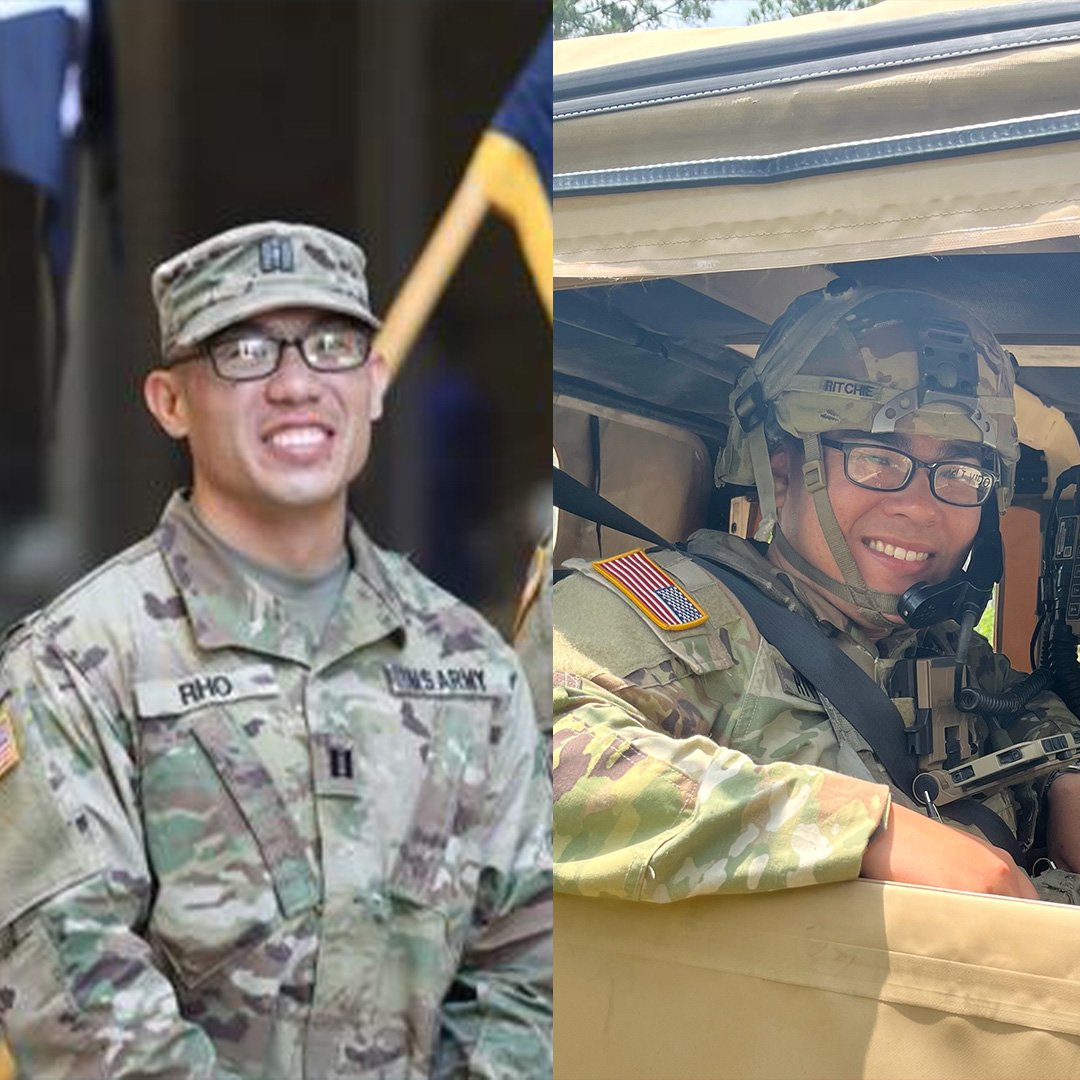
During their time as active-duty soldiers in the Army, Jason Rho and George Ritchie, both Georgia Tech Scheller Full-time MBA ’27, experienced service in many forms. It meant providing necessities to refugees, pushing through training exercises in Louisiana swamps, and building strong international partnerships.
Those experiences continue to shape how both veterans think about serving others today.
Rho has always viewed service “as a commitment to something greater than oneself,” with a focus on supporting individuals and communities as they work toward their goals.
“Service is doing something for someone who can’t do it for themselves,” Ritchie said. “That’s all I ever did in the Army.”
Today, the setting has changed, but their commitment has not. As MBA students, Rho and Ritchie spent the summer gaining industry experience through internships at Raytheon and Gulfstream Aerospace. Back at Scheller, they’re applying lessons from their Army service as leaders in the Veterans Club, supporting fellow veterans as they pursue their professional goals and strengthening the broader Scheller community.
This Veterans Day, learn more about Rho and Ritchie’s time in the Army and how a dedication to service continues to influence their lives.
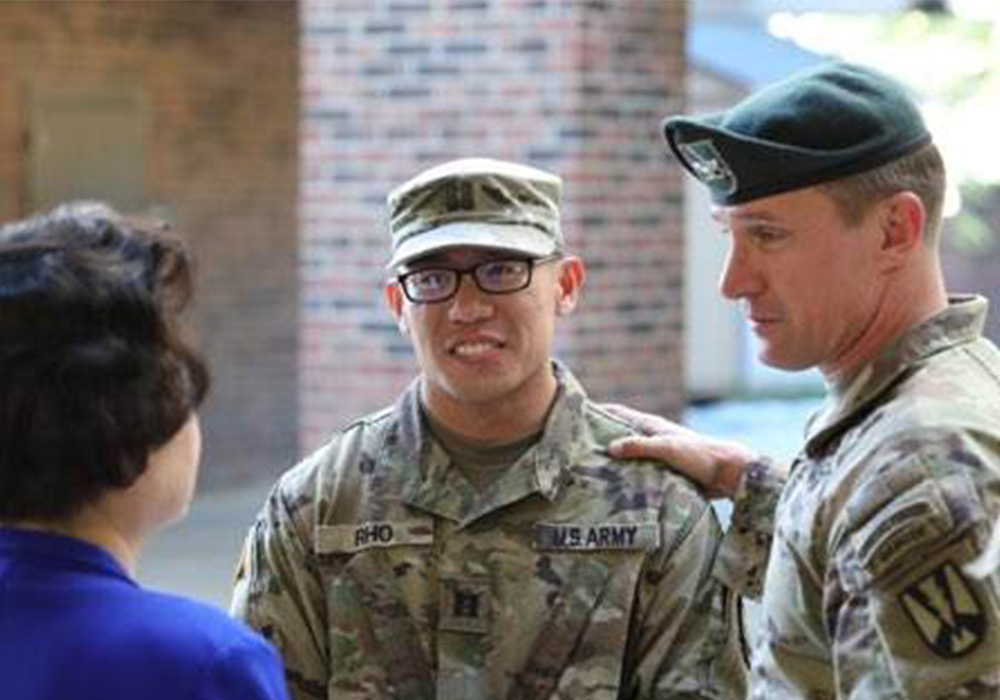
Jason Rho
Military Rank: Major in the Army
What initially drew you to attend West Point and pursue a career in the Army?
My desire to serve in the military began at an early age, shaped by my family’s history of military service and an appreciation for the opportunities the United States provided my family. My uncle retired from the U.S. Army, while my father and grandfather served in the Republic of Korea Army. Growing up, I associated military service with purpose, commitment, and strong values. I was fascinated by the military as a child. I once wrote to an Air Force service member for a school project to ask about the aircraft they operated and was thrilled to receive a response.
I first learned about West Point, the United States Military Academy, through a childhood teacher and mentor. After attending a recruiting event, I knew I wanted to pursue engineering there and begin my military career. West Point’s reputation, rigorous academic and physical challenges, and emphasis on leadership appealed to me. It offered the opportunity to challenge myself while fulfilling a lifelong desire to serve and give back to a country that had given my family so much.
Looking back on your military career, what moments stand out as the most formative?
Some of the most formative moments of my military career came from working alongside our international allies and building relationships with the soldiers I served with. Participating in exercises with European and Asian allies gave me a greater appreciation for the trust placed in the U.S. military and the importance of strong international partnerships.
Just as meaningful were the long days and nights spent training in the field, where shared challenges created bonds that extended beyond our military responsibilities. Looking back, those experiences showed me that the impact of military service extends beyond our borders and lives on through the relationships and camaraderie built along the way.
You served in leadership positions, including platoon leader, company commander, and battalion operations officer. How did your approach to leadership evolve over that time?
My leadership approach evolved from direct, hands-on supervision to leading through others while maintaining a broader organizational perspective. As a platoon leader, I worked closely with approximately 36 soldiers, providing daily coaching, making tactical decisions, and learning the fundamentals of leadership with guidance from senior noncommissioned officers (NCOs) and my company commander.
As I progressed to company commander and battalion operations officer, my focus shifted to long-term planning, organizational readiness, resource management, and developing subordinate leaders. I learned to delegate, empower junior leaders, and communicate a clear purpose rather than oversee every aspect of execution.
My relationships with senior NCOs also evolved from mentorship to leadership partnerships built on complementary expertise. Ultimately, I came to understand that leadership was less about what I could personally accomplish and more about enabling others to succeed.
What was the most challenging leadership situation you faced in the Army, and what did it teach you?
One of the most challenging leadership situations I faced occurred when a soldier experienced a medical emergency during a field training exercise. I had to manage my emotions while remaining composed, providing clear direction, and keeping the unit focused despite the uncertainty.
The experience reinforced the importance of emotional discipline, clear communication, and maintaining a sense of purpose in difficult circumstances. Most importantly, it taught me that leadership isn’t about being unaffected by challenges, but about providing stability for others when they need it most.
What motivated you to earn your MBA?
After transitioning from active-duty military service, I entered the private sector with Johnson Controls and Amazon, where I began to recognize gaps in my understanding of broader business functions. My engineering background and experience in military and civilian operations gave me a strong foundation in leadership, problem-solving, and operational management, but I wanted to deepen my understanding of finance, strategy, supply chain, and business decision-making. With the GI Bill, I saw an MBA as an opportunity to build on that experience, expand my career opportunities, and prepare for the next stage of my career.
What skills from the Army have been most valuable during your Scheller MBA experience?
Some of the most valuable skills I’ve carried from the Army into my MBA experience and summer internship at Raytheon are adaptability, discipline, problem-solving, and the ability to build trust within a team. Military service taught me how to balance competing priorities, navigate complex challenges, and recognize the strengths each person brings to a team.
Those lessons have carried into my experience at Scheller, where my original MBA core team has remained close and continued working together even after our initial assignments ended. Each of us brings different experiences and perspectives that complement one another, reinforcing something I learned in the military: The strongest teams aren’t necessarily those with the most talented individuals, but those whose members trust one another and know how to work together toward a common goal.
George Ritchie
Military Rank: Captain in the Army
Looking back on your military career, what moments stand out as the most formative?
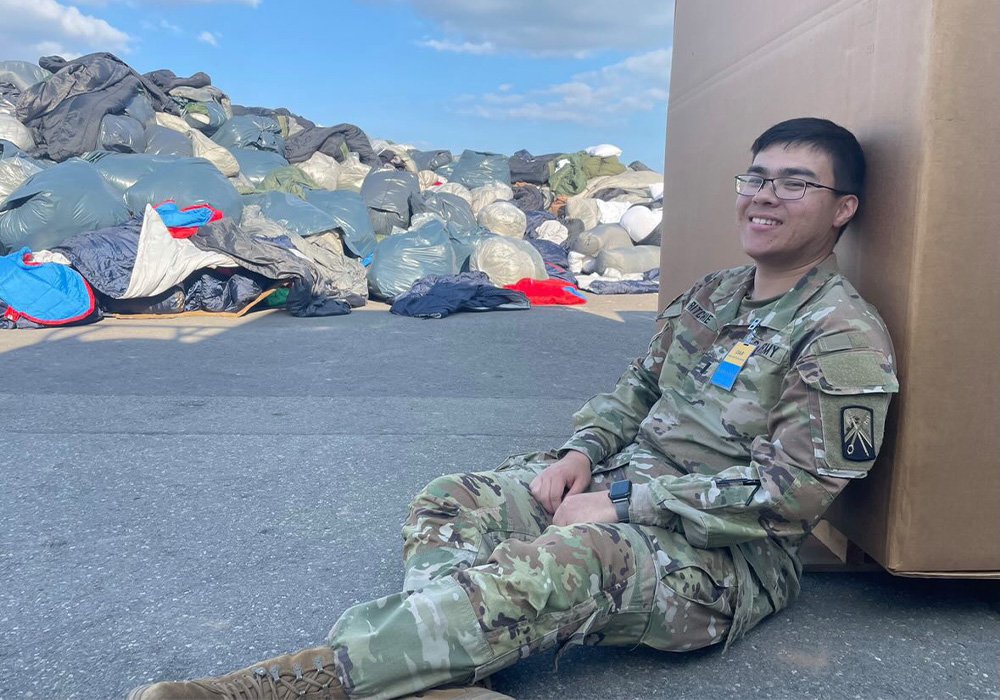
I think you find out who you are when you’re pushed in ways you don’t think you can overcome. What comes out of that crucible is a better, truer sense of yourself. For me, one of those experiences was participating in the Kabul Airlift. More than 40,000 Afghan refugees arrived at Ramstein Air Base in Germany, and my team worked around the clock providing logistics support, from food and water to sleeping bags and manpower for the life support areas.
It was one of the most exhausting periods of my time in Germany, but also the most rewarding. I relied on everything I had learned as a logistics officer and on a network of people who leaned on one another in a way only a crisis can foster. I came out of the experience more confident in my abilities, with greater trust in the people around me and the knowledge that maybe some small good came from those months of work.
What was the most challenging leadership situation you faced in the Army, and what did it teach you?
I was fortunate to command a forward support company for an assault helicopter battalion, leading 98 soldiers across 12 career fields while ensuring the unit had what it needed, even under the most austere conditions. Between a European rotation and the Joint Readiness Training Center, essentially a monthlong game of laser tag in the Louisiana swamps, I learned to balance mission requirements with taking care of my people.
The experience taught me that if you take care of your soldiers, they will take care of you. I invested in developing junior leaders and preparing them to eventually fill my position, which empowered them to understand my intent and take initiative to solve problems. It also taught me how to build strong relationships with those I supported and communicate actionable information in a way they could understand.
What motivated you to earn your MBA?
I wanted to grow and transition to something more stable after my service obligation, and pursuing an MBA with a concentration in supply chain and logistics management felt like a natural next step. I wanted to translate my military experience into a private-sector setting and better understand how future employers and customers think and communicate. An MBA would allow me to build on my problem-solving and cross-functional skills while learning how to apply them in a way that resonates in the business world.
Are there moments in the classroom where you find yourself drawing directly from lessons you learned in the military?
The strongest examples that come to mind happened during the core leadership courses. The Army doesn’t have a monopoly on leadership, and it was interesting to see practices we used formally labeled and applied as use cases.
You’ll see all kinds of leadership in the military: good, bad, and everything in between. You get formal leadership education through the Army, but you also get informal lessons as you copy what you want from good leaders and learn from bad ones.
What military habits or mindsets do you still rely on every day?
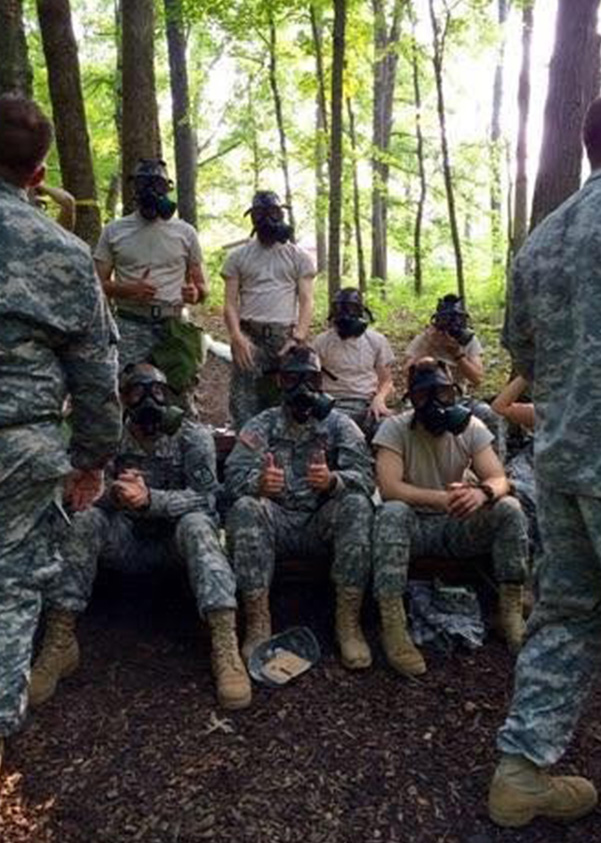
As cringeworthy as basic training stories can be, one experience taught me a new way to think. After completing a grueling gas chamber exercise, we had to remove our masks and shout the Soldier’s Creed. We made it about two lines before everyone was gagging and dry heaving, and everything in my body was telling me to run out the door.
Then something clicked. As terrible as it was, it would eventually end. No matter how difficult something gets, if you can push through it long enough, it’ll be over. Anyone can do anything for X amount of time. That realization helped me relax, and sure enough, we eventually shuffled out of the room. I’ve applied that mindset in different ways over the past eight years, and it seems to be a universal concept.
The Army often requires leaders to make decisions with incomplete information. How did that skill translate during your internship at Gulfstream Aerospace?
I thought the Army had a lot of acronyms, but I should have waited until aviation procurement. With a short internship and an even shorter runway, I had to learn and do at the same time. Experienced buyers and procurement specialists mentored me on everything from supplier relations to production schedules, but I learned you can’t ask the questions that truly matter until you’re already rolling the ball. Thankfully, my background in supply chain and operating in rapidly changing environments helped me stay organized, composed, and successful.