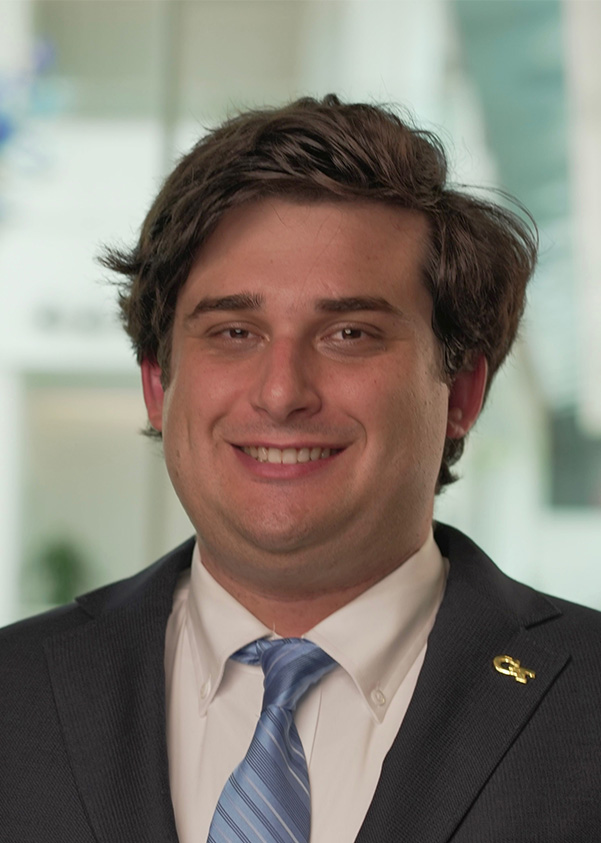
Hometown: Katonah, New York
Describe yourself in 15 words or less:
Data-driven operator building resilient systems and communities with lasting impact.
Fun fact about yourself:
When I was a kid, I memorized most of the New York City subway system. It comes in handy now, as I don’t need to look at a map when I’m visiting!
Where was the last place you worked before enrolling in business school?
Supply Chain and Logistics Specialist, Droplette, Inc.
Where did you intern during the summer of 2025?
I interned on the Procurement team for the SC Johnson Lifestyle Brands group.
Where will you be working after graduation?
Operations and Supply Chain Solutions Senior Associate, PwC
Community Work and Leadership Roles in Business School:
- Peer Leadership Committee Co-Chair
Serving as co-chair of the Peer Leadership Committee was the most meaningful leadership experience of my MBA. PLC plays a central role in shaping Scheller’s culture. I mentored first-year students through recruiting, academics, and the emotional side of business school while also designing programming that strengthened our cohort’s sense of community. - Net Impact, VP of Sustainability Careers
As vice president of Sustainability Careers, I focused on making sustainability tangible. I helped plan our trip to the Leeds Sustainability Case Competition and coordinated student participation in ClimateCAP. My goal was to allow classmates to have real conversations about sustainable business and help them make connections beyond our school. - Scheller Pride Board Member
Being part of Scheller Pride was important to me personally. I worked to strengthen visibility and support for LGBTQ+ students within the MBA program. That included organizing events, building community, and ensuring prospective students saw Scheller as a place where they could show up fully as themselves. Representation matters. Business school can feel high pressure, and having spaces where people feel safe and understood makes a real difference. - MBA Ambassador
As an MBA Ambassador, I served as a resource for prospective students as they explored the opportunity to attend Scheller. I had many honest conversations about what Scheller does well and who it is best for. I appreciated being able to give applicants a transparent view of the culture that ultimately shaped my experience.
Which academic or extracurricular achievement are you most proud of during business school? - Peer Leadership Committee Co-Chair.
PLC stands out because it directly shaped people’s experiences at Scheller. Titles matter less to me than impact, and this role gave me the opportunity to support classmates at pivotal moments. Watching someone land an internship they once thought was out of reach or regain confidence after a setback felt incredibly meaningful. Hosting the annual Schell-X became a highlight for me and for much of the cohort, as it showcased the creativity and personality that define Scheller beyond the classroom. This role also pushed me to grow. Leading peers requires humility, organization, and emotional awareness. I became more comfortable having hard conversations, giving candid feedback, and stepping up when things needed direction.
What achievement are you most proud of in your professional career?
During the pandemic, I worked in supply chain operations for a wipes manufacturer experiencing historic demand spikes. We were responsible for keeping essential sanitation products on shelves while raw materials and transportation were constrained.
I helped coordinate procurement and production decisions to prioritize high-need regions and stabilize supply. It was a high-pressure environment, but it showed me how operations can directly serve communities. That experience shaped my long-term interest in resilience and responsible supply chain leadership.
Why did you choose the Scheller College of Business?
I chose Scheller because of its intentionally small, collaborative community. I did not want an MBA where relationships felt transactional or purely recruiting-driven. I wanted professors who knew my name and classmates who would become long-term collaborators.
Scheller also stood out because of its strength in operations and analytics. With my background in supply chain, I wanted a program that would deepen my technical skills while expanding my strategic perspective. Being in Atlanta made that even more compelling. The city is home to major corporations, a growing sustainability ecosystem, and strong consulting pipelines. It offered both professional access and a sense of community that felt grounded, personal, and real.
Who was your favorite MBA professor?
I took his e-commerce class, and what stood out was how he connected analytics to real consumer behavior. He challenged us to think about how digital platforms shape incentives, pricing, and competitive strategy. His class was rigorous but practical. It strengthened my understanding of how online ecosystems operate. He also made complex topics approachable. I left that class feeling more confident navigating digital strategy conversations.
What was your favorite course as an MBA?
Collaborative Product Development with Professor Karthik Ramachandran.
In this class, my group developed and pitched a smart refrigerator concept designed to reduce food waste and save consumers money on groceries. We built and tested a prototype, iterated based on feedback, and presented a full go-to-market concept.
The class was messy in the best way. It forced us to reconcile technical feasibility, consumer needs, operational realities, and financial constraints. As someone with an operations background, I appreciated seeing how early product decisions cascade into supply chain complexity later. It reinforced that innovation works best when cross-functional teams collaborate early and honestly.
What was your favorite MBA event or tradition at Scheller?
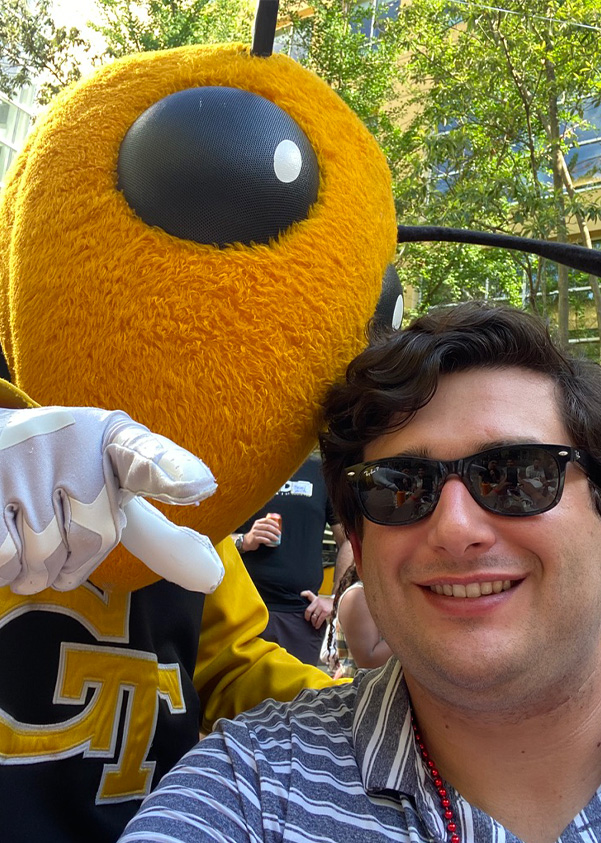
Scheller tailgates. They reflect the balance that defines the program. Scheller students are ambitious and analytical, but we genuinely enjoy being around each other. Tailgates brought together first-years, second-years, and alumni to support Yellow Jackets football and celebrate the Scheller community.
After intense weeks of recruiting and group projects, it was refreshing to connect outside the classroom. It reminded me that business school is not just about outcomes. It is about shared experiences and friendships that last beyond graduation.
Looking back over your MBA experience, what is the one thing you’d do differently and why?
I would have trusted my instincts earlier. In my first semester, I focused heavily on optimizing performance. Grades, leadership roles, recruiting timelines. Over time, I realized that the most meaningful parts of my MBA came from following genuine interests, like sustainability careers or mentoring through PLC, rather than chasing every opportunity. If I could go back, I would tell myself to go deeper instead of broader sooner. Depth creates impact, busyness does not.
What was the most impactful case study you had at Scheller and what was the biggest lesson you learned from it?
The Red Lobster case stood out because it showed how marketing decisions cannot be separated from operations and financial structure. The company had filed for bankruptcy and was attempting to emerge under new leadership. At the same time, aggressive promotions like the unlimited shrimp offer drove overwhelming traffic, long wait times, kitchen breakdowns, and frustrated customers. Social media posts described two-hour waits and stressed staff trying to manage volume. We had to decide whether it was worth saving the brand or if it was the right time to sunset.
A few classmates and I actually went to a local Red Lobster after class to observe the experience firsthand. It made the discussion more tangible. The lesson was clear: Promotions can generate demand, but if operations, cost structure, and customer experience are not aligned, they destroy value instead of creating it. For me, the case reinforced that sustainable strategy requires alignment across marketing, finance, and operations. Short-term traffic spikes do not fix structural problems. Disciplined execution does.
What did you love most about Scheller's location in the heart of Midtown Atlanta?
Atlanta feels ambitious but still personal. It is home to Fortune 500 headquarters, fast-growing startups, and strong nonprofit organizations. That diversity of industry made it easy to connect classroom learning to real-world conversations. I attended company visits, alumni events, and sustainability meetups that felt directly relevant to my goals.
At the same time, Atlanta is accessible. The Beltline, local restaurants like Cypress and Rreal Tacos, and distinct neighborhood communities make it easy to build a life outside of work. For me, that balance between opportunity and livability made my MBA experience richer.
What business leader do you admire most?
Fisk Johnson. As CEO of SC Johnson, he has emphasized doing the right thing for people and the planet, even when it is not the most immediately profitable choice. His commitment to sustainability, long-term thinking, and family ownership values demonstrates that business can prioritize responsibility alongside performance.
Having interned at SC Johnson, I saw how that philosophy shapes decisions across the organization. It reinforced my belief that operational excellence and social responsibility should go hand in hand.
What is one way that Scheller has integrated AI into your programming? What insights did you gain from using AI?
AI was integrated directly into analytics coursework and project work across classes. In one major project, I built predictive models to assess long-term health risk using multiple machine learning approaches. I’m currently taking an AI in Business course where we design and test our own models to solve applied business problems. Working hands-on with machine learning reinforced that AI is a decision-support tool, not a replacement for leadership. The real value comes from asking the right question, validating the data, and translating model outputs into responsible action.
Which MBA classmate do you most admire?
Angelica Martini. Angelica was part of my first-semester core team, and she immediately set a high bar. She brings sharp analytical and creative thinking, but what truly sets her apart is how she leads.
She founded the Disabilities in Business Club at Scheller to create space and support for students navigating visible and invisible disabilities. That initiative took vision and courage. She identified a gap and did something about it.
On group projects, she challenges assumptions thoughtfully and ensures everyone contributes. She makes teams better not just through intelligence, but through inclusion and consistency.
What are the top two items on your professional bucket list?
- Lead a large-scale supply chain resilience transformation that measurably improves both cost performance and environmental impact.
- Take on a senior leadership role where I can shape corporate strategy while embedding sustainability and ethical decision-making into core operations, not as an afterthought.